
News & Blog

by Craig Watson 27 March 2026
What is the Climate Change Levy (CCL)? The Climate Change Levy (CCL) is a UK government tax introduced in 2001 to encourage businesses and the public sector to improve energy efficiency and reduce carbon emissions. Unlike RO , CfDs and FiTs , which fund renewable generation, CCL is a direct tax on energy consumption. CCL applies to the supply of electricity, gas and certain solid fuels used for non-domestic purposes. It is charged per unit of energy consumed, regardless of when or how that energy is used. The levy is administered by HMRC and is designed to create a price signal that incentivises lower energy use and investment in efficiency measures. Who pays the CCL? CCL is payable by non-domestic energy users, including businesses, charities and public sector organisations. Domestic consumers are exempt. Energy suppliers are responsible for collecting the levy and passing it on to HMRC, but the full cost is passed through to customers via energy bills, usually as a clearly identifiable line item. Some organisations may qualify for CCL relief or exemption, most notably: Businesses with a valid Climate Change Agreement (CCA) Certain energy-intensive processes Supplies generated from qualifying renewable sources How much is the CCL (and when are rates revised)? CCL rates are set by the government and are typically revised annually, usually taking effect from 1 April each year. Rates are published by HMRC in advance to allow suppliers to update billing. For both gas and electricity, CCL is charged on a pence per kilowatt hour (p/kWh) basis. The current CCL rates are 0.775p/kWh, set to rise to 0.801p/kWh from April 1st 2026, and then to 0.827p/kWh from April 1st 2027. Unlike RO or CfDs : CCL is not forecast or reconciled There is no recycling or levy adjustment The charge is fixed and unavoidable unless a formal exemption applies Why CCL matters for businesses Because CCL is a straight consumption tax, it directly rewards reduced energy use. Efficiency improvements, on-site generation, and CCA participation can all reduce CCL costs. This makes CCL one of the few policy costs that businesses can actively manage rather than simply absorb. If you would like to ensure your CCL charges have been invoiced correctly, contact us today and we can review your recent invoices to make sure you aren't paying more than necessary.
by Craig Watson 27 March 2026
For many UK businesses, energy contracts can contain complex terms that aren’t always fully understood at the point of signing. One clause that often raises questions, is the take or pay clause . Understanding how this works is essential for avoiding unexpected costs and managing your energy procurement effectively. What is a take or pay clause? A take or pay clause is a contractual provision that requires a business to pay for a minimum level of energy consumption, regardless of whether that energy is actually used. In simple terms, you agree to “take” a certain volume of gas or electricity, or “pay” for it anyway. This clause is most commonly found in fixed energy contracts, particularly for larger commercial or industrial users, where suppliers price agreements based on forecasted consumption. How does it work in practice? When entering into a contract, your supplier will estimate your annual consumption based on historical usage data. This forms the basis of your agreed volume. The take or pay clause then sets a tolerance band -- often around 80–120% of expected usage. If your business consumes within this range, everything operates as expected. However, if your usage falls below the lower threshold, you may be charged for the shortfall. This means paying for energy you haven’t used. On the flip side, if you exceed the upper limit, additional units may be charged at a higher, non-contracted rate. Why do suppliers include take or pay clauses? Suppliers use take or pay clauses to manage risk. When they agree a fixed contract with your business, they typically purchase energy in advance based on your forecasted demand. If your usage drops significantly, they are left with surplus energy that must be resold -- often at a loss. The clause ensures that suppliers can recover these costs, which in turn allows them to offer more competitive pricing upfront. What are the risks for businesses? The main risk is overestimating your energy usage. If your operations change, you could fall below your contracted volume and face additional charges. There is also a financial planning risk. Businesses may believe they have secured a competitive rate, only to find that under-consumption penalties increase their effective cost per unit. How can you manage take or pay risk? The key to managing this clause is accurate forecasting and contract alignment. Reviewing historical consumption data, understanding operational changes, and factoring in growth or reduction plans are all critical steps before agreeing a contract. It’s also important to negotiate appropriate tolerance levels. Some suppliers offer more flexible bands, which can reduce the risk of penalties if your usage fluctuates. Regular monitoring throughout the contract is equally important. Identifying trends early allows you to take action. How an energy broker can help Take or pay clauses are a prime example of why energy procurement should go beyond simply comparing prices. At SeeMore Energy, we help businesses understand the full terms of their contracts -- not just the headline rates. We work with you to ensure your consumption forecasts are realistic, negotiate favourable contract terms, and match you with suppliers whose products align with your business profile. If you’re unsure whether your current contract includes a take or pay clause, or want to avoid unexpected costs in your next agreement, get in touch for a free, no-obligation review.
by Craig Watson 27 March 2026
For many UK businesses, energy contracts can contain complex terms that aren’t always fully understood at the point of signing. One clause that often raises questions, is the take or pay clause . Understanding how this works is essential for avoiding unexpected costs and managing your energy procurement effectively. What is a take or pay clause? A take or pay clause is a contractual provision that requires a business to pay for a minimum level of energy consumption, regardless of whether that energy is actually used. In simple terms, you agree to “take” a certain volume of gas or electricity, or “pay” for it anyway. This clause is most commonly found in fixed energy contracts, particularly for larger commercial or industrial users, where suppliers price agreements based on forecasted consumption. How does it work in practice? When entering into a contract, your supplier will estimate your annual consumption based on historical usage data. This forms the basis of your agreed volume. The take or pay clause then sets a tolerance band -- often around 80–120% of expected usage. If your business consumes within this range, everything operates as expected. However, if your usage falls below the lower threshold, you may be charged for the shortfall. This means paying for energy you haven’t used. On the flip side, if you exceed the upper limit, additional units may be charged at a higher, non-contracted rate. Why do suppliers include take or pay clauses? Suppliers use take or pay clauses to manage risk. When they agree a fixed contract with your business, they typically purchase energy in advance based on your forecasted demand. If your usage drops significantly, they are left with surplus energy that must be resold -- often at a loss. The clause ensures that suppliers can recover these costs, which in turn allows them to offer more competitive pricing upfront. What are the risks for businesses? The main risk is overestimating your energy usage. If your operations change, you could fall below your contracted volume and face additional charges. There is also a financial planning risk. Businesses may believe they have secured a competitive rate, only to find that under-consumption penalties increase their effective cost per unit. How can you manage take or pay risk? The key to managing this clause is accurate forecasting and contract alignment. Reviewing historical consumption data, understanding operational changes, and factoring in growth or reduction plans are all critical steps before agreeing a contract. It’s also important to negotiate appropriate tolerance levels. Some suppliers offer more flexible bands, which can reduce the risk of penalties if your usage fluctuates. Regular monitoring throughout the contract is equally important. Identifying trends early allows you to take action. How an energy broker can help Take or pay clauses are a prime example of why energy procurement should go beyond simply comparing prices. At SeeMore Energy, we help businesses understand the full terms of their contracts -- not just the headline rates. We work with you to ensure your consumption forecasts are realistic, negotiate favourable contract terms, and match you with suppliers whose products align with your business profile. If you’re unsure whether your current contract includes a take or pay clause, or want to avoid unexpected costs in your next agreement, get in touch for a free, no-obligation review.
by Craig Watson 27 March 2026
Why electricity prices keep going up By Adam Novakovic  Electricity has always been more than just a utility it is an essential component in every part of UK business. Yet in recent years, costs have been climbing steadily, and today’s bills are weighed down by more than just wholesale market prices. There can be long periods of time where wholesale prices remain stable or decrease, yet the amount businesses are paying for their electricity continues to rise. A large part of the increase comes from policy decisions. Most notably the way the UK has chosen to fund decarbonisation, its reliance on renewables, and its failure to make a serious commitment to nuclear energy.
by Craig Watson 27 March 2026
What manufacturers need to know before signing their next contract and how we can help For many energy-intensive UK businesses, rising gas and electricity costs have been an increasingly uncomfortable thorn in their side. Even as wholesale prices have dropped, new line items to fund green-initiatives and ever-increasing standing charges have harmed the competitiveness of British businesses. What is the British Industrial Competitiveness Scheme? As a response to these rising costs, the government is now consulting on the British Industrial Competitiveness Scheme (BICS). The aim of this scheme is to support eligible manufacturing businesses by exempting them from the indirect costs of three charges that suppliers typically pass through to end users: Renewables Obligation (RO) Feed-in Tariffs (FiTs) Capacity Market (CM) The expectation is that this should reduce electricity costs by approximately 4p/kWh, saving many mid sized manufacturers between £150,000-£300,000 per year. While consultation is on-going, the plan is for this scheme to be introduced in April 2027. Who is likely to be eligible? The BICS is currently in the consultation stage and awaiting confirmation of details. However, the scheme is expected to be available to business that are: Manufacturing frontier businesses within an IS-8 sector Manufacturing foundational industries supplying important inputs into those frontier sectors Electricity Intensive Manufacturers Eligibility is expected to be assessed using a combination of SIC codes (what the business is registered as) and HS codes (the goods/products manufactured). The consultation also acknowledges that many businesses produce a combination of eligible and non-eligible goods. For these businesses, it is planned that the discount will be pro-rated based on what percentage of production is related to eligible products.
by Craig Watson 27 March 2026
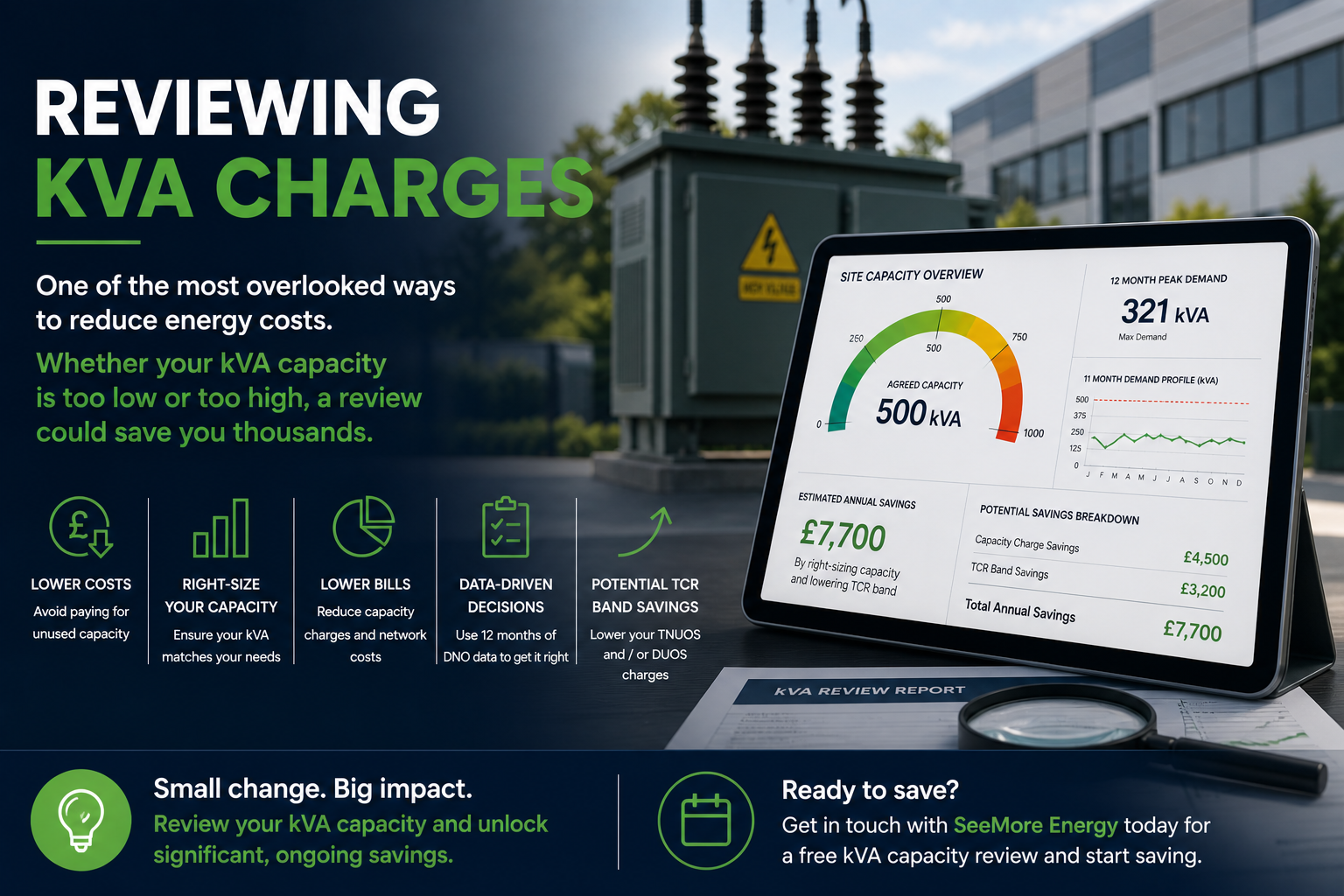
With energy prices remaining volatile and non-commodity costs continuing to rise , reducing energy spend has become a priority for businesses across the UK. While many focus solely on securing a competitive contract, the reality is that meaningful savings often come from a combination of procurement strategy, operational efficiency, and technical optimisation. Procurement: Timing and Strategy Matter Procurement is often the first option businesses look to when trying to reduce costs. Securing energy at the right time and with the right type of contract can significantly impact your overall spend. Rather than simply renewing at contract end, businesses should consider: Monitoring wholesale market trends Forward purchasing or flexible contracts Aligning contract length with risk appetite and market outlook A well-timed procurement strategy can protect against volatility and avoid locking into unfavourable rates during market peaks. Energy Audits: Reduce and Optimise Consumption Reducing consumption remains one of the most effective ways to lower energy costs. Conducting an energy audit helps identify where energy is being wasted and where efficiencies can be introduced. This can include: Identifying inefficient equipment or processes Highlighting opportunities to reduce usage during peak tariff periods Shifting consumption to off-peak times where rates may be lower Even small operational changes, such as adjusting run times or improving maintenance, can deliver meaningful savings over time. kVA Capacity and TCR Banding Reviews Many businesses are unknowingly overpaying due to incorrect technical settings on their supply. kVA Capacity Your agreed supply capacity determines how much power your site can draw from the grid. If this is set too high, you may be paying unnecessary capacity charges. If it’s too low, you risk excess capacity penalties. Regular reviews ensure your capacity accurately reflects your operational needs. TCR Banding (Targeted Charging Review) TCR banding determines how certain network charges are applied, particularly for electricity. Being placed in the wrong band, or failing to optimise your position, can significantly increase costs. Reviewing both kVA capacity and TCR banding can unlock savings without any change to consumption. Bill Validation: Are You Being Charged Correctly? Energy billing is complex, and errors are more common than many businesses realise . From incorrect meter readings to misapplied charges and outdated contract rates , even small discrepancies can add up over time. Implementing a robust bill validation process ensures that: You are billed in line with your contract All charges are accurate and correctly applied Any historical overcharges are identified and recovered Without ongoing validation, many businesses simply assume their bills are correct. This can lead to overpaying and spending more than necessary on electricity. Government Schemes and Support Depending on your business type and energy usage, you may be eligible for government schemes or exemptions designed to reduce costs.  These can include: Climate Change Agreements (CCAs) Energy-intensive industry exemptions Various relief mechanisms on network and policy charges Eligibility criteria can be complex, and many businesses miss out simply because they are unaware of what they qualify for. Reviewing your eligibility regularly ensures you are not leaving money on the table. The Value of Expert Support Reducing energy costs is no longer just about finding the cheapest unit rate. It requires an approach that combines procurement, technical optimisation, and ongoing validation. For many businesses, navigating this landscape internally can be time-consuming and complex. That’s where working with a specialist energy broker can make a real difference. At SeeMore Energy, we support businesses in identifying cost-saving opportunities across every aspect of their energy strategy. From market timing and contract negotiation to bill validation and technical reviews. If you want to ensure your business isn’t overpaying, get in touch today. Our team can analyse your kVA capacities and TCR banding, advise on your current contracts, recommend optimal procurement strategies, and identify if you are eligible for any government schemes.
by Craig Watson 27 March 2026
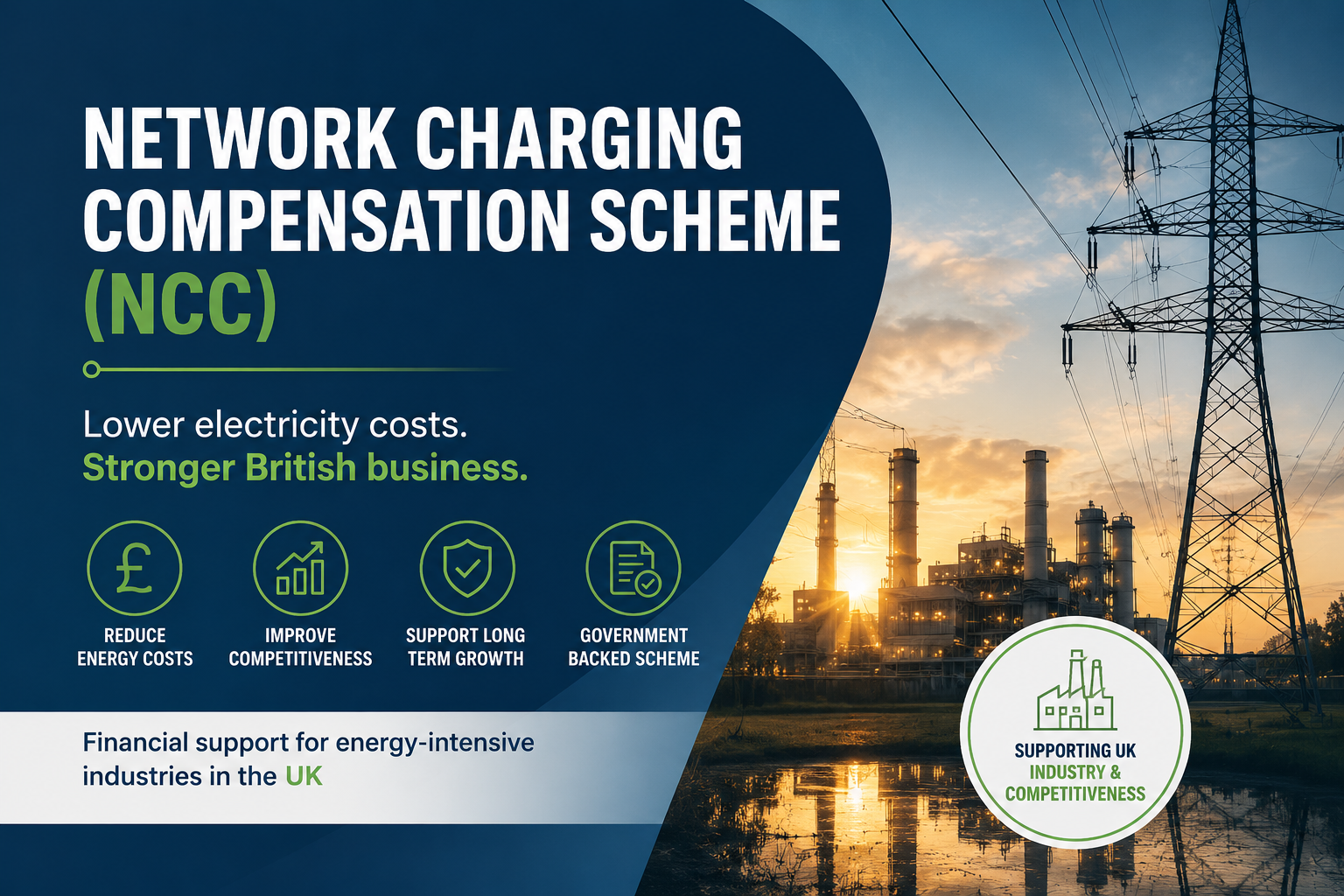
Transmission Network Use of System (TNUoS) charges are fees levied to recover the cost of building, maintaining and operating Great Britain’s electricity transmission network. TNUoS charges ensure that the costs of the transmission system are paid for by those who use it, with larger energy consumers paying the lion's share of the costs. Who pays TNUoS charges? TNUoS charges apply to both electricity generators and electricity users. For most businesses the charge is recovered through their electricity supplier, with TNUoS costs either forming part of the Standing Charge , or being a separate line item. How do TNUoS charges work in practice? The TNUoS charge is a per day amount -- similar to the normal standing charge -- set by the relevant Distribution Network Operator (DNO). The daily rate will vary depending on what TCR band the meter is in, with larger users normally classified as being in a higher TCR band and paying more. However, if you believe your meter has been incorrectly classified and is in the wrong TCR band, it can be reviewed by contacting the DNO. How much is TNUoS (and when are charges set)? TNUoS demand charges are set annually and published ahead of each charging year, which runs from 1 April to 31 March. Unlike policy costs, TNUoS is not charged in p/kWh. Instead, it is levied as a p/day. This can add up to several tens of thousands of pounds per year for high usage meters. With significant investment being made to upgrade the transmission network to accommodate renewable generation, it is likely that TNUoS costs will continue to rise in the coming years, perpetually accounting for a larger proportion of electricity bills. Why TNUoS matters for businesses For high-consumption and flexible sites, TNUoS represents a growing expenditure that is difficult to manage. Some businesses can get relief from the rising TNUoS costs from the Network Charging Compensation mechanism , introduced last year. However, for many businesses, the best they can do is to review that they are in the correct TCR band and are being invoiced correctly by their supplier. If you would like to ensure that you are in the correct TCR band and that your TNUoS charges are being invoiced correctly. Contact us today and we can review your recent invoices to make sure you aren't paying more than necessary.
by Craig Watson 27 March 2026
How Can My Business Lower Standing Charges? For many UK businesses, standing charges are an unavoidable part of energy bills. Unlike unit rates, which fluctuate based on usage, standing charges are fixed daily costs applied regardless of how much energy you consume. Leading many businesses to look into ways in which these standing charges can be reduced. In some scenarios they are unable to be reduced, but there are times in which they can be lowered. Reducing these costs, requires a more detailed understanding of how these charges are calculated and what factors influence them. What makes up a standing charge? Standing charges are often made up of several components, including: Network costs (Distribution Use of System and Transmission charges) Metering and data services Policy costs and levies Supplier administration fees While suppliers apply the standing charge, a large proportion of the cost is driven by network-related charges, meaning there are opportunities to reduce them — but not always in obvious ways. TCR Banding The Targeted Charging Review (TCR) has changed how certain network costs are recovered, particularly for non-half-hourly (NHH) customers. Under TCR, many charges are now fixed and linked to banding structures based on usage characteristics rather than actual consumption. Being placed in a higher band can significantly increase your standing charges. Various use of system charges are based on which TCR band a meter is in, and these charges can often make up part of the standing charge. While banding is determined by historical usage and meter type, there may be opportunities to review your position and ensure it accurately reflects your business profile. By contacting your DNO , you can see when the next TCR band review is scheduled -- in situations where usage is below the levels associated with your TCR band, you may be able to request a review before then. Validate your bills As with all elements of energy billing, errors can and do occur . Standing charges are no exception. Businesses should ensure that charges match agreed contract terms, correct rates and structures are applied, and no duplicate or incorrect costs are included. Without proper validation, these issues can go unnoticed. Particularly as standing charges are often seen as “fixed” and not questioned. Take a strategic approach Reducing standing charges is rarely about a single change. Instead, it involves a combination of: Technical reviews (capacity, metering, banding) Ongoing validation Strategic procurement and supplier selection For many businesses, these areas are complex and time-consuming to manage internally. Take control of your energy costs At SeeMore Energy, we help businesses go beyond headline rates and uncover hidden savings within their energy setup -- including standing charge optimisation. From kVA capacity reviews and TCR analysis to full bill validation , we ensure every element of your energy costs is working in your favour. If you want to reduce unnecessary charges and ensure you’re not overpaying, get in touch today. Our expert team will identify opportunities and help you take full control of your energy spend.
by Craig Watson 27 March 2026
The Capacity Market: An untapped revenue source With wholesale markets volatile and network costs rising, many businesses are looking at strategies to reduce energy spend. In addition to lowering costs, there are ways that large consumers of energy can monetise their existing energy set up. By selling back unused capacity via the Capacity Market (CM), businesses can generate tens of thousands of pounds each year, without having to make any material changes to how they run their operations. What is the Capacity Market? The UK Capacity Market was introduced in 2014 to safeguard security of supply. The CM has two main objectives: Incentivise new sources of generation that can prevent issues on the demand-side. Provide a last-resort mechanism to prevent electricity shortages during times of system stress. Administered by National Energy System Operator (NESO), the scheme pays providers for being available to deliver capacity during periods of system tightness. Businesses can receive payments, not for generating electricity, but for committing to reduce demand or increase supply if required. Capacity is secured through annual auctions (one year ahead and four years ahead), which set a £/kW price. Once contracted, participants receive an availability payment in return for meeting testing requirements and being ready to respond to a system stress event. Since the CM’s inception, there has never been a full system stress event triggered. Although precautionary notices have been issued and subsequently stood down – normally within 2 hours of being issued. How Can Businesses Make Money from It? For many businesses, the opportunity lies in Demand Side Response (DSR). If a business can demonstrate that it is capable of reducing load during a stress event -- even for just 30 minutes -- that reduction can be contracted into the Capacity Market. The process for this is: Historical half-hourly data is analysed to establish normal usage. Periods where usage dropped materially (e.g. shutdowns, maintenance, early finishes, seasonal dips) are identified. The difference between normal usage and the reduced period becomes the site’s deliverable capacity. This capacity is aggregated with other businesses into a CM Unit (CMU) and entered into the auction. Payments are then made quarterly in arrears for being available.
by Craig Watson 27 March 2026
As the UK pushes towards a low-carbon energy system, there has been a sharp rise in costs for businesses connected to the grid. The National Energy System Operator (NESO) has released its latest five-year outlook on Transmission Network Use of System (TNUoS) charges, and -- from April 2026 – energy costs will rise significantly to fund the country’s energy transition. What Are TNUoS Charges? NESO uses the funds from TNUoS charges to build, operate, and maintain the high-voltage transmission network across Britain. The forecasts for 2026/27 have indicated that NESO will be looking to almost double the revenue generated in the previous year. While suppliers pass these charges on to both households and businesses, the scale of the increases ahead will be most acutely felt by large energy users.
by Craig Watson 27 March 2026
How often are business energy bills wrong? For many UK businesses, energy bills are simply accepted as a fixed cost of operations. However, industry experience suggests that billing errors are far more common than most organisations realise. Research published by OFGEM showed that 27% of small businesses found errors in their invoices, with this percentage rising to 48% for larger organisations. In some cases, they can lead to significant overpayments with businesses being unaware they are paying more than necessary. While it is difficult to assign an exact figure across the entire market, it is widely accepted within the energy industry that a meaningful proportion of business energy bills contain errors at some point during a contract. These issues can range from minor discrepancies to substantial inaccuracies that impact cash flow and budgeting. Why do energy billing errors occur? Business energy billing is inherently complex. Unlike domestic billing, commercial contracts often involve multiple components, including wholesale costs, network charges, levies, and capacity-based fees. This creates more opportunities for things to go wrong. Some of the most common causes of billing errors include: Estimated billing : Where actual meter reads are not available, suppliers may rely on estimates that do not reflect real usage. Wrong contract rates applied : Agreed prices may not always be correctly reflected in billing systems. Capacity and network charge errors : Incorrect kVA capacity levels or misapplied TCR banding can significantly increase costs. Change of tenancy or supplier issues : Errors often arise during transitions, where data is not transferred correctly between parties. Given the number of moving parts involved, even well-managed accounts can occasionally experience discrepancies. How big can the impact be? The financial impact of billing errors varies depending on the nature of the issue. In some cases, errors may only amount to small differences on individual invoices. However, when left unresolved over time -- particularly across multi-site portfolios -- these discrepancies can quickly add up. It is not uncommon for businesses to uncover thousands, or even tens of thousands of pounds in overcharges when historical bills are reviewed in detail. Larger energy users, or those with complex metering arrangements, are typically at greater risk. Are suppliers responsible for catching errors? Energy suppliers are responsible for issuing accurate bills, but the reality is that billing systems are not infallible. With large volumes of data and frequent industry changes, errors can and do occur. Importantly, many issues are only identified when the customer or their advisor actively reviews the data. Without this oversight, incorrect charges may continue for extended periods. What should businesses do? To minimise risk, businesses should take a proactive approach to energy bill validation . This includes regularly checking invoices against contract terms, ensuring meter readings are accurate, and reviewing capacity and network charges. For many organisations, however, this level of scrutiny can be time-consuming and technically challenging. As a result, more businesses are turning to specialist support to ensure their billing is correct. Take control with bill validation At SeeMore Energy, we understand how complex and costly billing errors can be. That’s why we’ve developed a dedicated Bill Validation system designed to identify inaccuracies, recover overcharges, and ensure your invoices are fully aligned with your contract and usage. Get in touch today to learn more about receiving a free trial for our Bill Validation system , and make sure you’re only paying for the energy you actually use.
by Craig Watson 27 March 2026
Ever since the Summer of 2021, energy prices have been above their historical levels. Whilst the initial spike created by the Russia/Ukraine conflict was short-lived, prices never fully returned to their pre-conflict levels.  More recently, the first quarter of 2024 saw some reprieve as wholesale prices dropped, but prices rose by over 150% between February of 2024 and February 2025.
Show More