


January Review 2026
By Adam Novakovic
January began with a sense of optimism. The new year brought hopes that energy prices could soon return to levels not seen since 2021, wholesale prices were falling and large quantities of new LNG were scheduled to be available for import during 2026. However, events that transpired during the first 31 days of the year have caused prices to rise and have sent waves of fear throughout the energy markets.
The month began with a wave of cold weather leading to above-expected gas consumption. An Arctic blast combined with Storm Goretti brought temperatures down to below -10°C and led to gas power stations being needed to make up the shortfall, causing an uptick in wholesale gas prices.

While gas reserves were being used at an escalated rate to help meet the extra demand brought by this cold-spell, there appeared to be less of a direct relationship between gas reserve levels and the wholesale price. With LNG supplies being readily available, it seems as though reserve levels will cease to have as significant an impact upon the market.
The major driving force behind price rises this month came when speculation increased about the US taking military action against Iran. Any conflict would likely have an impact on the shipping route through the Strait of Homuz. With approximately 20% of the world’s oil and LNG passing through the strait, anything that could limit shipping access would lead prices to rise.
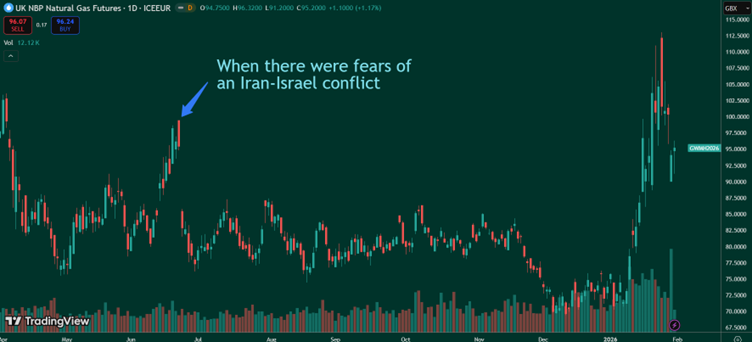
We saw this last year when there were fears of an extended conflict between Israel and Iran:

At that time, prices spiked before dropping back down to previous levels once hostilities ceased.
Whether the current posturing will lead to an extended conflict remains to be seen. With Qatar and Turkey offering to mediate peace-talks -- and with Saudi Arabia and the UAE refusing to aid the US in any attacks -- there are still hopes that the situation can be resolved without any further escalations. The next week will be pivotal in the process; the Iranian foreign minister began talks in Turkey at the end of last week there are hopes that further dialogue can reduce tensions.
As a result of these geopolitical tensions, prices for Summer’26 electricity rose by 15% from the January 5th monthly low. For a business set to consume 2,000 MWh of electricity during this time, this represents an increase of £16,000, with the potential that prices may rise further should there be any conflict escalations worsen.
Outlook
While earlier weather forecasts had suggested a milder-than-normal February, they have since been revised and it appears that the coming month will be colder than previously anticipated. With energy prices being less reliant on gas reserve levels, this may not cause a large price rise, but it will likely still have some impact.

Greenland has recently been a cause of disagreements between Europe and the US and there are fears that this point of contention could lead to tariffs being implemented by both sides. The UK has shown solidarity with Denmark and as such could be one of the 8 European countries that the US imposes sanctions against. With the UK currently importing LNG from the US, this would lead to an increase in energy prices. Although, the US Supreme Court are set to rule on the legality of Trump’s tariffs during February, which may lead to the issue being taken out of the President’s hands.
The main influence behind energy prices for the near future is likely to be the developments in the Middle East: whether conflict occurs, and whether it turns into a prolonged conflict that draws in neighbouring nations. If a non-violent resolution can be achieved in the near future, then it’s likely we see prices return to the levels seen in the first week of January. However, any military action will lead to prices rising further.
For those with contracts set for renewal in the next 6 months, now is a time where careful consideration needs to be given to renewal time. By obtaining quotes now, further prices rises caused by any conflicts can be avoided. With the market being highly volatile, heightened scrutiny is needed, and energy procurement strategies should be individually tailored to a business’ needs. If your business would like assistance in developing a procurement strategy to help guide you through these turbulent times, contact us today for no-obligation expert advice.
Contact Us