
February 2026 Review
When writing monthly reviews, I research and make notes throughout the month that allow the final writing process to be straightforward, with all key points already in place. For this month, almost all of my notes had to be torn up and thrown away on the final day of February when the US declared war on Iran. It is rare that one story has the ability to cause a seismic shift of such magnitude that all other news affecting energy prices seem irrelevant by comparison, but – for the first time since the Russia-Ukraine conflict began – we have a geopolitical event of that level.
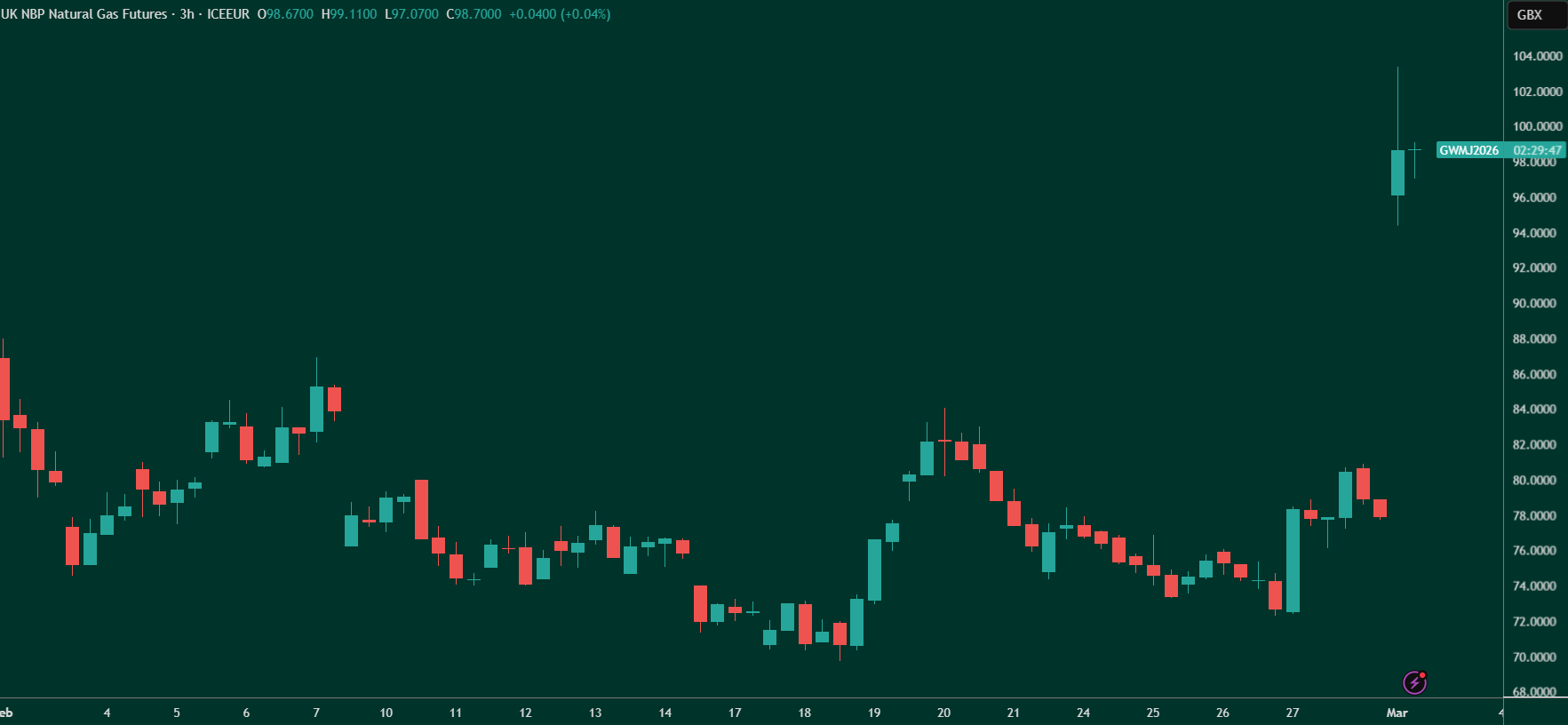
Electricity prices for the Summer’26 season had dropped as low as £65.66/MWh in mid-February, but opened up at £79.70/MWh this morning, showing an over 20% increase from this low point. Meanwhile, wholesale UK gas prices are trading 25% higher than when the market closed on Friday. For a business set to consume 10,000MWh of electricity during the summer, this represents a price increase of over £140,000 when comparing today’s price to the February low point.

The month had begun with falling wholesale prices. With weather for the end of February being forecast at levels below seasonal averages and US LNG export levels expected to show a significant increase from the beginning of March, worries surrounding low gas reserve levels were fading and there was an optimism that prices could drop further.
Throughout the month there were brief spikes in the wholesale energy prices when fears of conflict increased, but these spikes were short-lived. As peace-talks progressed there was a growing optimism that military action could be avoided and a diplomatic solution could be reached. Less than 24 hours before the US launched strikes against Iran, it had seemed that a key point of agreement had been achieved when Iran agreed to the demand of not stockpiling Uranium. Whilst this had been a key talking point from the US/Israeli side of negotiations, in hindsight it appears as though this was never the real issue, with Iranian nuclear capability being a prolific headline generator, but not the true cause of their desire for conflict. The US and Israel have been pushing hard for regime change, and it seems like nothing short of this will end any military action.
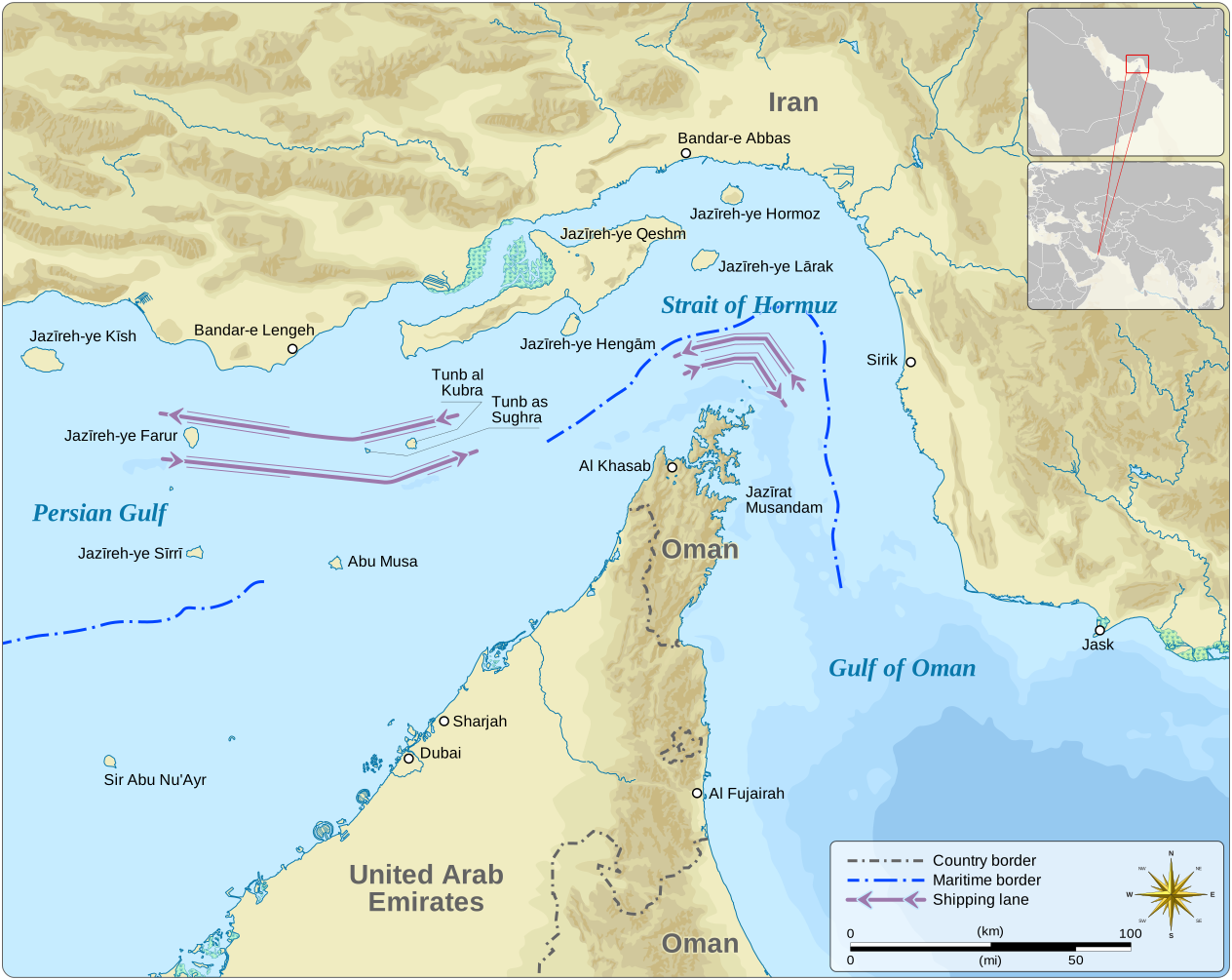
In the immediate aftermath of the US striking Iran, the Strait of Hormuz has been closed as a shipping route. This will limit the LNG that the UK can receive from Qatar. To contextualise the importance of this, when Russian gas exports to the UK were halted in 2021 wholesale gas prices peaked at 8x their previous levels and were largely above 2x the recent highpoints for a period of 14 months.
The UK imports over 3x as much LNG from Qatar now than it did from Russia in 2021. As such, any sustained disruption to supply could cause catastrophic price increases.
There are 2 ways this can be avoided:
1. Making up the Qatari LNG shortfall through alternative sources
2. A quick resolution to the conflict
The US is producing notably higher levels of LNG than back in 2021 and has a new supply (Golden Pass) commencing production this week. However, the global LNG market is expected to become more competitive with disruptions to shipping from the Middle East, and prices will rise.
Whilst President Trump has optimistically stated he believes operations should be concluded within 4 weeks, historically, US attempts at regime change in the Middle East don’t always go to plan. Airstrikes alone will be unlikely to achieve US/Israeli goals, and even after key personnel and targets have been eliminated there is a high likelihood of insurgency threats continuing. Exactly how this type of threat will impact shipping routes is unclear and will need to be monitored closely.

In the coming days prices will continue to spike, and it is likely they will remain elevated weeks or months to come. This morning, further attacks have been reported in Lebanon, UAE, Israel, and Saudi Arabia. This shows how many parts of the region can be dragged into the conflict and increases the probability of sustained hostilities. It also increases the likelihood that prices will continue to rise, at least through the early part of this week.
For those with renewals within the next 6 months, looking to lock in contracts immediately will likely be their best course of action. The optimism of a quick resolution to the conflict is currently priced into many supplier contracts, and the potential for suppliers to increase their risk-premium during an extended conflict makes any risk asymmetrical. We would recommend obtaining prices now for any business looking to renew before the final quarter of 2026.
For those whose contract end dates in the final quarter of 2026 or first months of 2027, it may still be beneficial to obtain prices soon -- at the very least to provide an awareness of what may need to be budgeted – but a patient approach may be superior if disruptions to the region look like they can be limited to the coming months.
If your business requires any advice on how this conflict is likely to impact your energy procurement, contact us today for free, expert advice from a team experienced in creating gas and electricity purchasing strategies for UK businesses.
Contact Us