Understanding kVA Capacity Charges and How to Reduce Your UK Electricity Capacity Charges
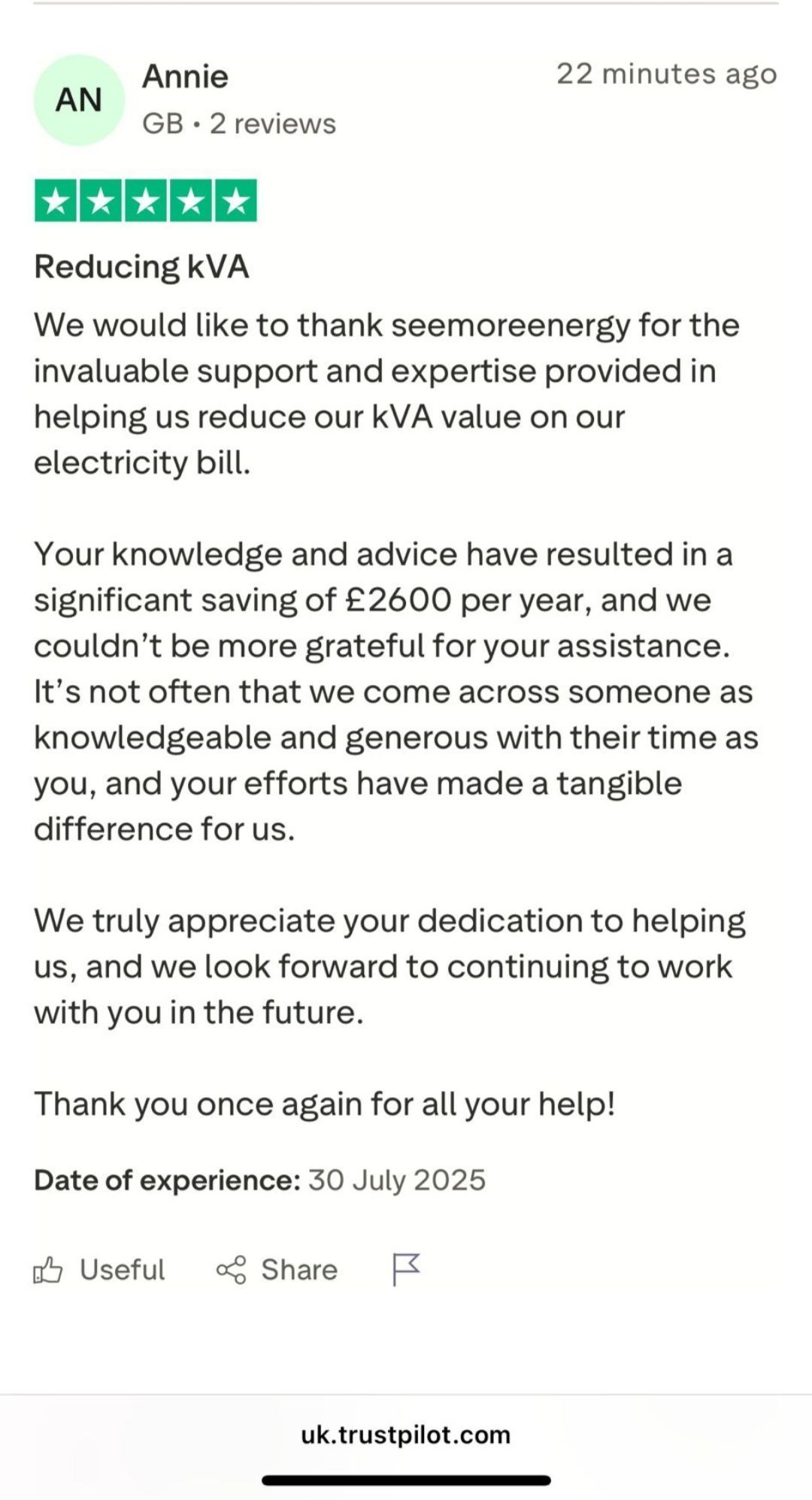
kVA capacity charges are one of the least understood parts of a UK business electricity bill, yet they can represent a significant ongoing cost for businesses with half-hourly electricity supplies.
This guide explains what electricity capacity charges are, how they are calculated, and how your business may be able to
reduce kVA charges and lower its electricity costs.
What are kVA Capacity Charges?
Imagine your electricity supply like a motorway. Your kVA capacity (also known as your
Agreed Supply Capacity) represents the width of the lane allocated to your business. This reserved capacity ensures you have enough electricity available to meet your maximum demand whenever you need it.
Your local
Distribution Network Operator (DNO) reserves this capacity for your premises, and you pay a daily
capacity charge whether or not you fully use it.
These charges form part of your
Distribution Use of System (DUoS) charges and appear separately on many business electricity bills.
Example
A manufacturing business has an Agreed Supply Capacity of 200 kVA to ensure there is sufficient power available during periods of peak demand.
The local Distribution Network Operator (DNO) reserves this capacity for the site and applies a daily capacity charge.
Assuming the current charge is
3.18p per kVA per day, the calculation would be:
200 kVA × 3.18p = 636p per day (£6.36)
Over the course of a year, this amounts to:
£6.36 × 365 days = £2,321.40 per year
If, after reviewing its half-hourly electricity data, the business discovers its maximum demand has never exceeded
140 kVA, it may be able to reduce its agreed capacity from
200 kVA to 150 kVA while still maintaining a safe margin.
The revised annual charge would be:
£1,741.05 per year
Potential annual saving: £580.35
How to Reduce kVA Capacity Charges
Many businesses are paying for more electrical capacity than they actually need.
If your agreed supply capacity is significantly higher than your actual maximum demand, you may be able to reduce your electricity capacity charges without affecting your operations.
Some ways to achieve this include:
- Monitor your electricity consumption – Analyse your
meter readings and half-hourly (HH) data to identify periods of high demand.
- Spread your electrical load – Avoid running multiple high-power machines simultaneously where possible.
- Shift non-essential processes – Schedule energy-intensive activities outside of peak operating periods.
- Upgrade equipment – Modern, energy-efficient equipment often requires lower peak demand, helping reduce your required capacity.
These measures not only help reduce kVA charges, but can also improve overall energy efficiency.
Lowering Your kVA Allowance
If your electricity usage consistently remains below your current agreed capacity, you can request a reduction in your Agreed Supply Capacity from your DNO.
Reducing your agreed capacity is normally an administrative process and, in most cases, does not require physical work on the electricity network, making it a free service.
However, it is important to ensure your future electricity requirements have been considered. If your business later needs additional capacity, increasing your agreed supply may involve network studies or connection charges.
For this reason, it's advisable to review historical electricity data and consider any future expansion plans before requesting a reduction.
Frequently Asked Questions
What are kVA charges on an electricity bill?
kVA charges are daily charges for the amount of electrical capacity reserved for your premises. They are separate from the cost of the electricity you consume.
Can I reduce my kVA capacity charges?
Yes. If your business consistently uses less electricity than your agreed capacity allows, you may be able to reduce your agreed supply capacity and lower your ongoing electricity capacity charges.
Are there ways to make money from our capacity?
Yes.
More businesses are looking into using their capacity to make additional income by selling capacity back to the market.
A Free kVA Capacity Review?
If you'd like to find out whether you're paying too much in kVA capacity charges, we can carry out a
free capacity review using your electricity data.
We'll assess your current agreed supply capacity, review your maximum demand and advise whether reducing your electricity capacity charges is likely to save your business money.
Contact us today to arrange your free review.