Preparing for Winter 2023

Craig Watson • 3 March 2023

Preparing for Winter 2023

Within the UK energy market, electricity and gas wholesale prices are split into different seasonal markets. These seasons cover different periods of time and allow us to see the current price for a set month, quarter, or season.


Each price gives us an idea of the expected supply and demand levels during the stated period and understanding the different markets and their pricing dynamics allows us to create buying strategies targeted towards identifying when is likely to be the most opportune time to make energy purchases.


In this article we will be discussing the price movements for the Winter 2023 market, which covers October ’23 – March ’24. 


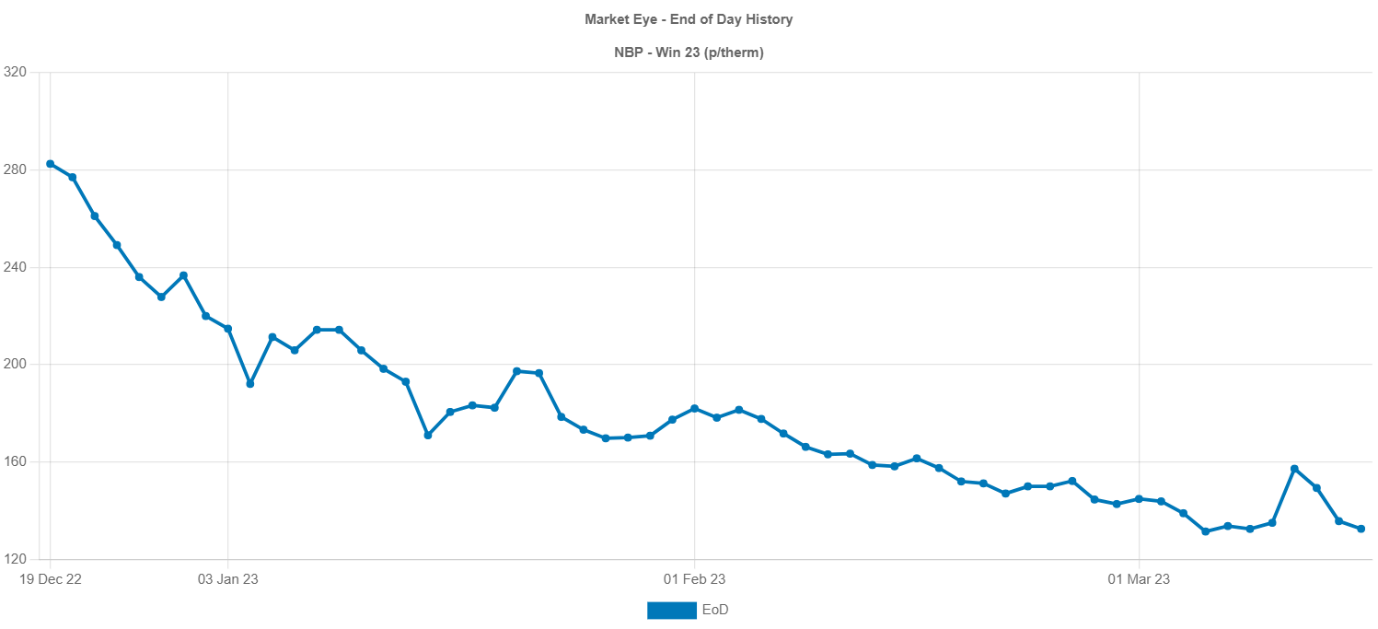
Winter ’23 prices since December 19th


Looking at the latest 3 months of gas and electricity prices we can see a clear trend. Prices have fallen to roughly half of their mid-December levels.


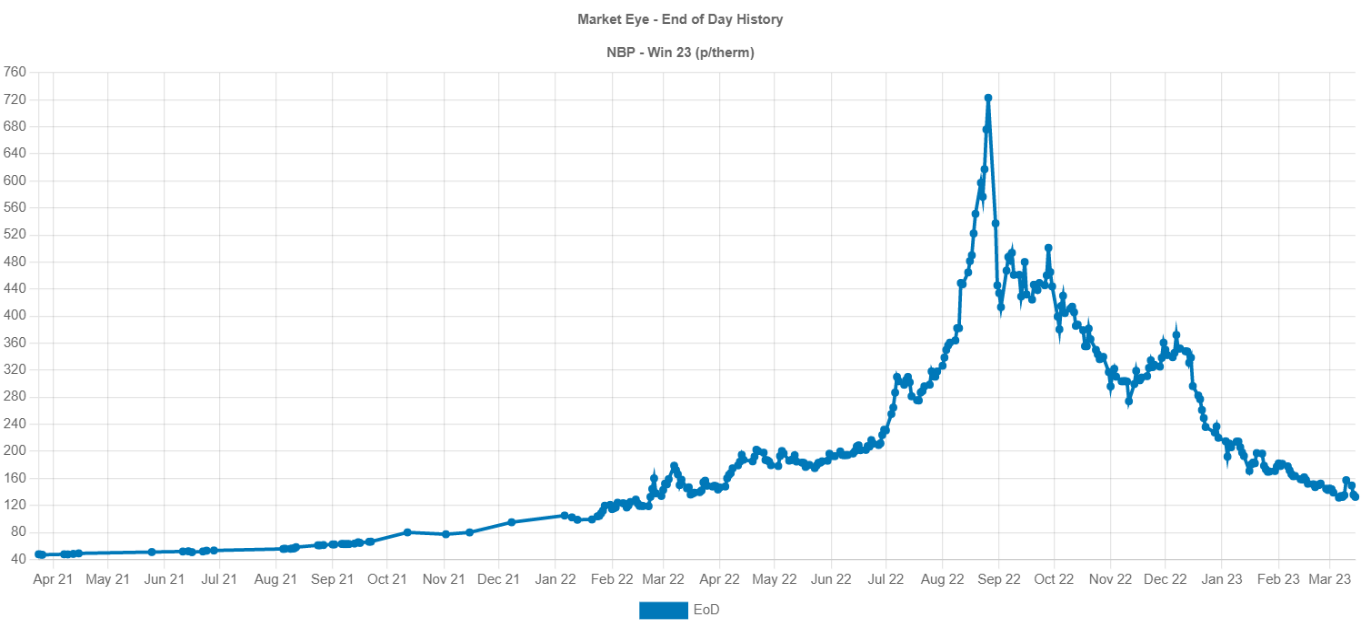
Heading into winter ’22 there was a lot of fear in the market. Prices had risen sharply during the previous year, and whilst they had dropped from their August high, there was still far more volatility than the market had experienced in recent years.


The Winter ’23 prices have now fallen to a level last seen around the beginning of April ’22.


Winter ’23 prices


The main driver of the price increases last year were the supply-shortages largely caused by the conflict in Ukraine. The European market struggled to find ways to make up for the shortfall in supply and there were fears that deficits could occur.


We now know that these shortages didn’t materialise as originally forecasted. In-part due to a mild winter, purchasing from other sources, and measures taken to reduce unnecessary usage. Despite this, fears remain in the market and there remains an increased awareness of the potential for shortages, particularly if there is a colder than normal winter.


With these fears and caution still in place it seems unlikely that the market will fall to pre-2022 levels in the short-term, but will it keep falling further?


Without possessing a fully functioning crystal ball it’s difficult to say with certainty. What we can do however is look at the factors that will serve as catalysts for future price movements.


The majority of the UK’s gas comes from the North Sea and from Norway. Any disruptions to either of these supplies would have a negative impact on price, however, it doesn’t seem particularly likely that any such disruptions will take place at this time.

Weather always plays a key factor in demand. An unseasonably hot summer or cool winter can lead to increases in demand leading to increased prices and the climate has become harder to predict in the last few years.


2022 saw numerous issues with infrastructure across Europe. Damaged pipelines, nuclear plants being shut down, rivers used for transportation drying up and no longer being functional all contributed to problems with supply and led to increased prices.  

If we don’t see any such problems and no major geopolitical issues occur then we can reasonably expect the fear to dissipate from the market and prices to slowly decrease. However, with there still being trepidation in the market we could see an overreaction should any problems occur, particularly if it something that receives significant media coverage.


As we’d always conclude, knowing how best to navigate energy markets can be complex and daunting, with no single strategy consistently working best, but with the assistance of SeeMore Energy, we can help create a clearly defined and understood strategy that allows you to confidence of knowing the market is being monitored on your behalf in the hands of an expert.


If you’d like us to provide a bespoke market tracker report to highlight how we would perform as your trusted energy partner, email craig@seemoreenergy.co.uk and he’ll support.

by Craig Watson 10 May 2023
Over the past 12-18 months, there's been a significant amount of well publicised turmoil and uncertainty within the energy markets, and for many businesses they've been stuck between a rock and hard place when it's come to understanding the best way to protect and future proof their business when needing to negotiate and secure extensions to their Electricity supply contracts. The post-Covid energy market was struggling to regain stability long before the Russian invasion of Ukraine back in March 2022, but the volatility reached record levels with a constant upward trend of pricing across all seasons between Jun'22-Jan'23, a rise which resulted in Government support arriving in the form of the EBRS, designed to help business between Oct'22-Mar'23. The EBRS offered hope by protecting contracted rates with varying levels of discount depending on when agreements were secured, however with delays and confusion on how the discount would be applied, customers were subject to agreeing contracts without knowing the billed rates, which in-turn appeared to be considerably more than first anticipated. One of the factors creating the confusion was the inability for customers and brokers to decipher how suppliers breakdown their costing of the 'Commodity' and 'Non-Commodity' elements which make up the fully delivered cost of the p/kWh customers pay for their Electricity. As the EBRS discount only applied to the 'Commodity' element, there was a huge need to clarify this separation but as is often the case, disclosure and transparency of the Commodity costings weren't available, leaving a guessing game which had hundreds and thousands, sometimes millions on the line when it came to forecasting budgets for businesses across the EBRS period. As time has moved, it's become evident that a large number of suppliers struggled to price with consistency throughout this period and with prices quoted around the £1/kWh figure at various points in Aug/Sept, the fallout for some businesses could last long into the future as they struggle to navigate the cost impact and balancing act of energy spend vs core business costs elsewhere. So what can we learn from this and how can we protect ourselves from the risk of similar challenges re-surfacing within the markets as we move forwards? For me, I believe the answer lies within the transparency and retrospective review of the Day Ahead (DA) markets. Whilst the focus of this article is on the Electricity Market pricing, the DA for Gas pricing is somewhat transferrable in theory and the considerations of the DA benefits moving forwards resonate for both. 
by Craig Watson 3 March 2023
For the first in a 4-part series of ‘Understanding your Energy Bill’ we focus on the Standing Charge.
by Craig Watson 3 March 2023
This February we saw wholesale prices continue to fall. The day ahead market was relatively stable with the price dropping slightly over the course of the last 4 weeks.