27 March 2026

Falling Wholesale Prices: The Time to Renew

Ever since the Summer of 2021, energy prices have been above their historical levels. Whilst the initial spike created by the Russia/Ukraine conflict was short-lived, prices never fully returned to their pre-conflict levels.


More recently, the first quarter of 2024 saw some reprieve as wholesale prices dropped, but prices rose by over 150% between February of 2024 and February 2025. 

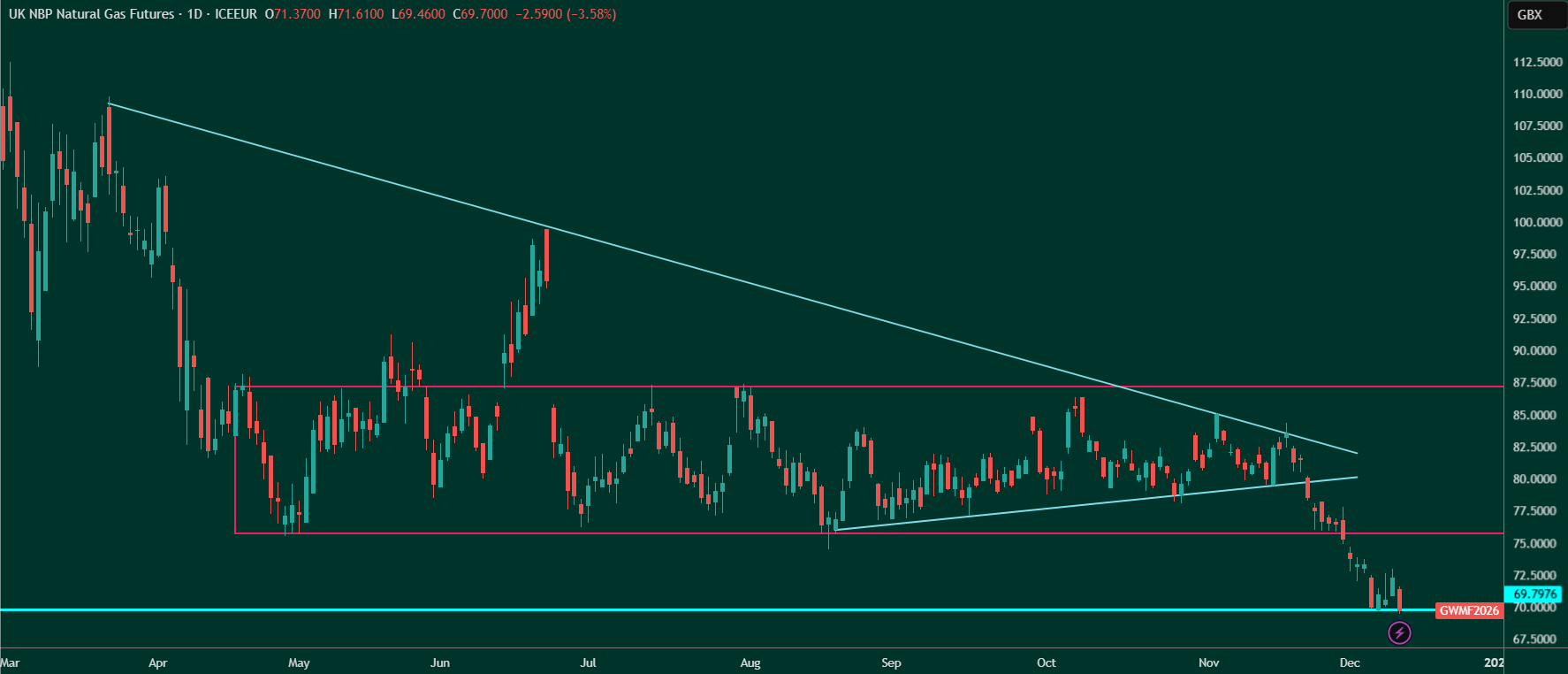
Prices did drop shortly after this but would then mostly trade in a tight range as prices remained propped up by EU mandated purchasing -- designed to ensure that all EU nations possessed sufficient gas reserves ahead of this winter. With that purchasing cycle now complete, we are seeing wholesale prices once again drop, with prices at the end of Wednesday (10/12/25) being their lowest since April’24.


Why are prices falling?

  •  An Easing of EU Buying Pressure

As previously mentioned, the EU mandated reserve levels have forced many nations to make purchases throughout the summer months. The deadline for EU nations to achieve the required % of gas reserve capacity has now passed, removing buying pressure from the market

  • Russia-Ukraine Peace Talks

Since the beginning of 2025, the EU banned the importation of Russian gas. This narrowed the available suppliers that European nations could purchase from. However, with active peace talks taking place there are hopes this decision could be reversed. It is seen as inevitable that the embargo being lifted would be a prerequisite ahead of Russia signing any peace deal. This would create a more competitive supply picture that would favour the buyers.

  • US LNG supply

The US made significant increases to the amount of LNG they are exporting during the course of 2025. With further production and export increases expected early in 2026, this has reshaped the supply vs demand balance. 56% of the LNG imported to Europe this year has come from US, meaning that European nations are less reliant on supplies from nations like Qatar where issues surrounding shipping routes had previously elevated prices.

  • A Mild Winter

Whilst weather forecasts are never 100% reliable, recent indications have suggested that the UK winter weather will be milder than usual, particularly after December 17th. With the supply side of the equation currently looking healthier than in recent memory, news that demand may also be reduced only further assists prices in their decline.


What this means for your business


Wholesale prices can sometimes have a slight delay before they are directly observable in the prices available to end users. With the most recent decline beginning on November 20th, we are now beginning to see this affect the unit rates available from UK suppliers.


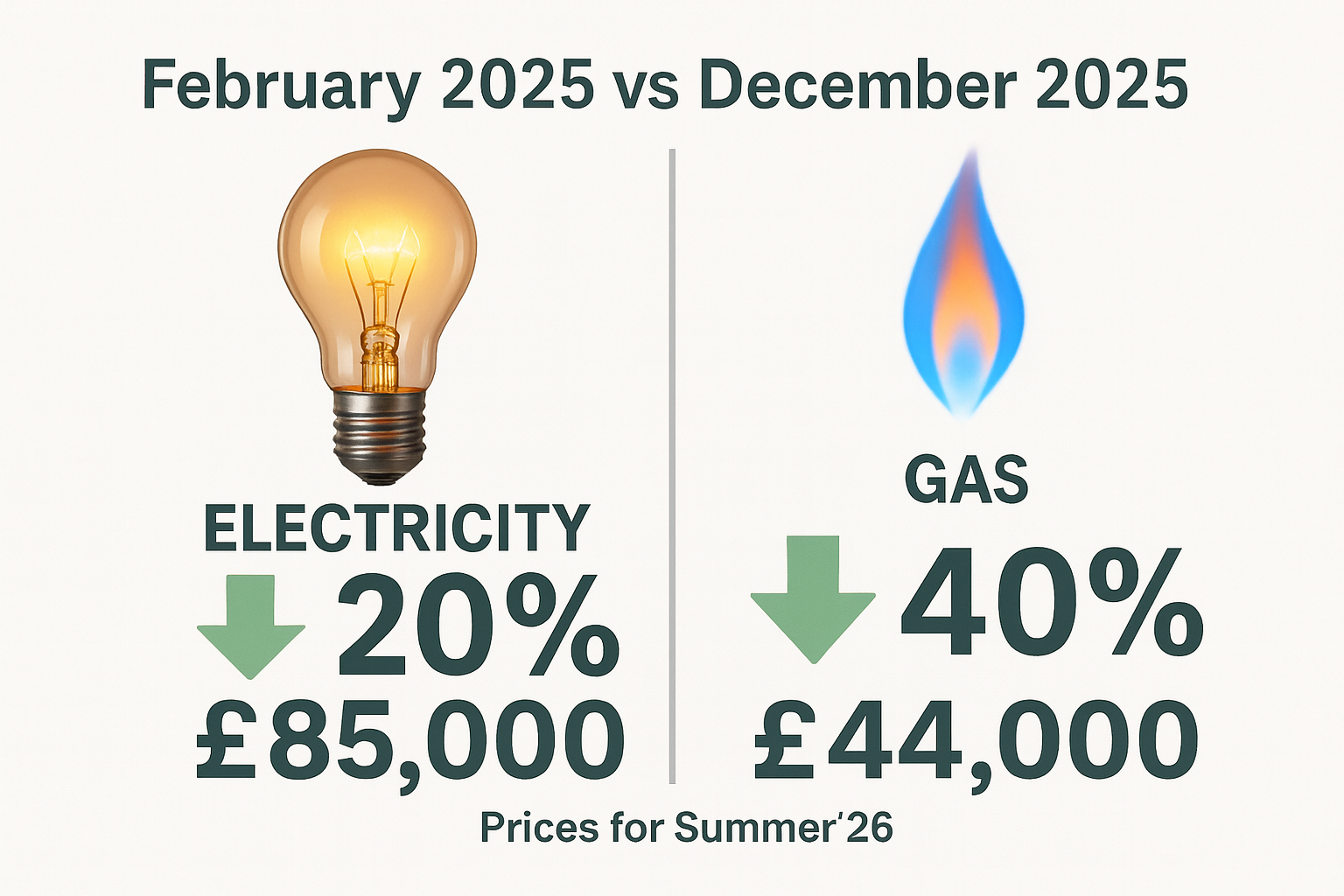
Prices for Summer’26 electricity are now over 20% lower than they were during February of this year, with gas prices now 40% lower for the same periods. For a business that is set to consume 5,000 MWh of electricity and 1,000 therms of gas during this period, this represents a saving of approximately £85,000 on the electricity and £44,000 on the gas.

For those with fixed contracts, if you have a contract end date coming up in the next 6 months, now could be the ideal time to conduct a market review and obtain quotes from as many as suppliers as possible.


If you would like assistance with this process, we can conduct a no obligation market review on your behalf –  obtaining quotes from a wide range of trusted suppliers and creating a price comparison document showing how the currently available rates compare to each other and your existing contract.


Contact one of our market experts today, and we can help you obtain the information necessary to accurately budget for 2026, in addition to obtaining the best rates currently available on your gas and electricity.

by Craig Watson 27 March 2026
With consumer spending declining and OFGEM raising their price cap, you would be forgiven for seeing February as a month where negative news was at the forefront, but in the energy markets, this was not the case.
by Craig Watson 27 March 2026
In a year that began with falling energy prices, there were recurring catalysts that led to prices climbing steadily higher. Geopolitical uncertainty and the perennial threat of escalating conflicts meant fear would maintain a constant presence in the wholesale markets. We will look back at the key energy stories from 2024, and how the energy markets are likely to shape up in 2025. Quarter 1  The year began with cautious optimism as the UK’s gas reserve levels were healthy and prices for the Summer’24 season were in freefall. In February, prices pulled back to their lowest levels since 2021, and for the first time in a while, we identified that there was greater potential for upside risk than for further downward price movement: “ there now (exists) an asymmetrical element of risk should the market encounter a supply-side problem of significance. ” During February we had advised customers on flexible contracts that this was an ideal time for making purchases. March would see prices begin to ascend again as international conflict would create problems with LNG imports, and we would highlight the geopolitical risks as an area for concern moving forwards: “ fears remain and there are potential negative catalysts that could lead to prices rising further, with the main factors to watch out for being based on geopolitical unrest. “ For a business that purchases their energy in advance, this quarter was the optimal time for purchasing during 2024. In February, electricity prices for Winter’25 were down to 7.75p/Kwh, and as low as 6.05p/Kwh for Summer’25. Winter’25 ended the year with prices above 11.1p/Kwh, with Summer’25 prices exceeding 9p/Kwh. For a company that uses 500,000Kwh of electricity per month, the difference between buying at the February low point compared to today’s prices would represent a yearly saving of over £200,000.
Show More