
December 2025 Review
By Adam Novakovic
With the frenetic pace of the Christmas season and thoughts about whether the presents have been wrapped, if all of the Amazon parcels have arrived, and concerns over the turkey being sufficiently sized for the entire family, you may be forgiven for not having taken the time to track the energy markets this December. In our final monthly review of 2025, we will aim to bring you up to speed with how the energy markets are developing and what impact this is likely to have on British businesses.

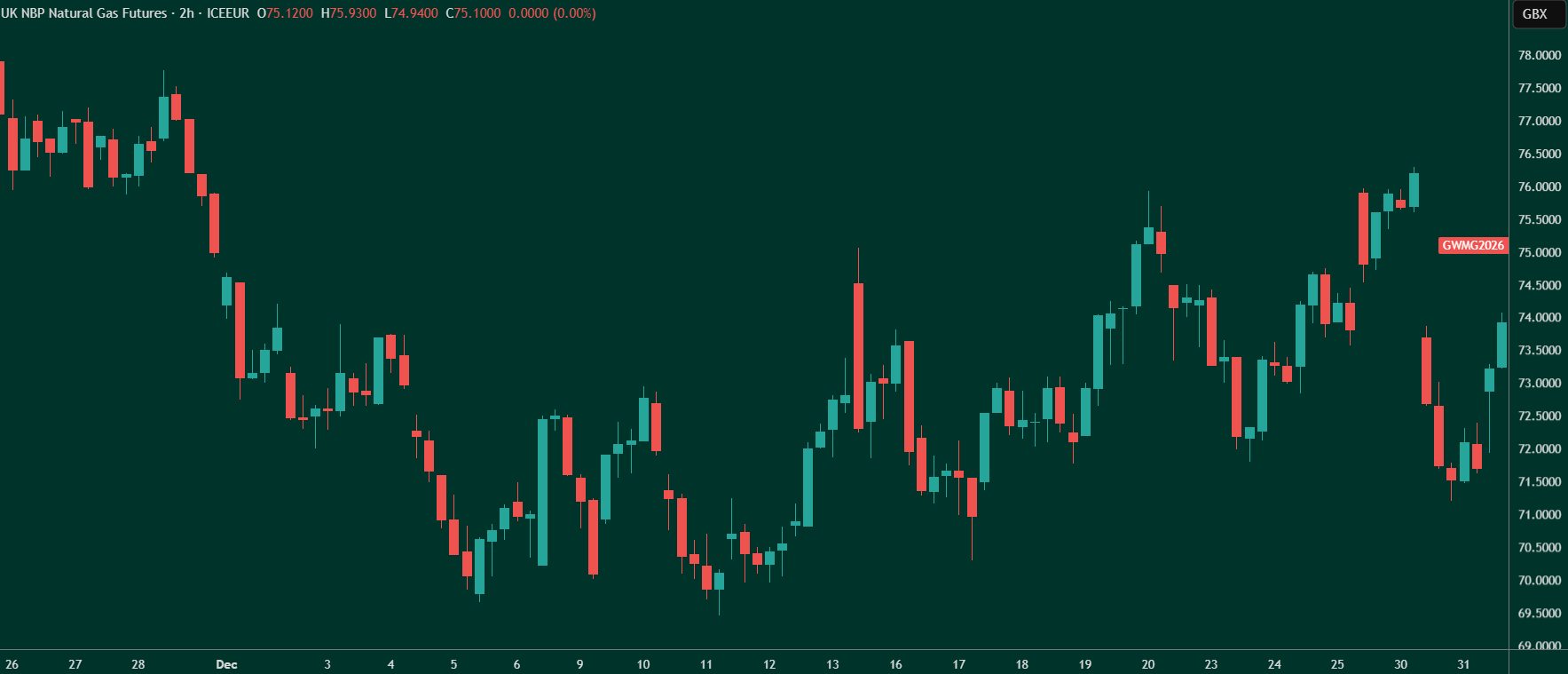
After the wholesale gas price dropped sharply at the end of November, we saw this downward momentum continue into the early parts of December. Weather forecasts for the month were predicting milder-than-usual temperatures with wind-levels higher than the monthly norm, adding to the power set to be generated by wind farms.
Throughout the month, gas prices for Winter’26 fell by 3%, representing a saving of £5,425 for a business set to consume 250,000 therms of gas during the period.
By the end of the first week of December, wholesale prices had hit their lowest levels since July of 2024. This led to many gas prices being at their lowest levels since before the Russia-Ukraine conflict started.
However, for many European industries this may be too-little, too-late. Energy price gaps still exist when comparing European energy prices to the US or China, and some energy-intensive industries have already relocated their European production sites. 190,000 corporate insolvencies were recorded in Western Europe in 2025 with energy costs being cited as a major cause. Without further investment, it appears that Europe may continue to struggle in the global market due to energy prices.
In the UK, one of the major causes of rising energy prices, despite a falling wholesale market, has been government schemes designed to promote green energy that wasn’t capable of being integrated into the existing energy infrastructure. At the start of December, OFGEM announced £28bn is to be spent over the next 5 years on network upgrades. These costs will largely be raised from Use of System charges, paid for by the end user. Whilst this was to be expected, it offers little consolation for the businesses whose competitiveness is being harmed by the decisions of policy makers who fail to consider the true costs of their decisions.

An example of this was seen as last year as the total costs of managing wind output came to almost £1.5bn, which will be passed on to customers through balancing charges. There are proactive schemes designed to ensure that the grid is upgraded to a level that will lower future balancing costs. Although, it will likely take years before the end user feels the benefit of these upgrades, meanwhile UK businesses will continue to pay higher rates than many of their international competition.
Outlook
Norwegian gas flows into the UK have helped allay any fears of gas shortages this winter, however, it is predicted that Norway may be heading for a domestic energy shortfall by 2030. Demand is currently rising drastically and Norway may struggle to meet this demand while also achieving their climate targets. Whether this will impact Norwegian exports remains to be seen, but it will be worth keeping an eye on over the coming months as this has the potential to affect future UK energy prices.

It is expected that the Suez Canal will return to its shipping capacity in 2026 after many shipping firms sought alternative routes in the wake of persistent Houthi attacks. With a tentative cease-fire agreed between Israel and Palestine, the Houthis have seemingly ceased their attacks on commercial vessels. We have already seen some shipping firms re-test the waters with a small number of cargo ships. Should this trend continue, it will allow further LNG exports from the region which will likely help further drops in energy prices.
In the short-term, the largest driver behind energy prices is likely to be the weather. The first 3 weeks of January are likely to be cold and snowy, with unseasonably high wind. After this, it is anticipated that more mild weather will close out the month. If these forecasts are accurate, we may some short-term price spikes but nothing sustained.
Any further positive news from the Russia-Ukraine peace-talks could help aid prices in their decline, but for the near future it seems as though a steady drop or a period of little change is most likely in the energy markets.
If your business requires advice with its energy procurement, management, or planning, then don’t hesitate to contact Seemore Energy to speak to experienced advisors who can help you with bespoke strategies and advice that is tailored to your needs.
Contact Us