

Sharon Keevins • December 4, 2025

February Review 2024

By Adam Novakovic, Energy Markets Consultant


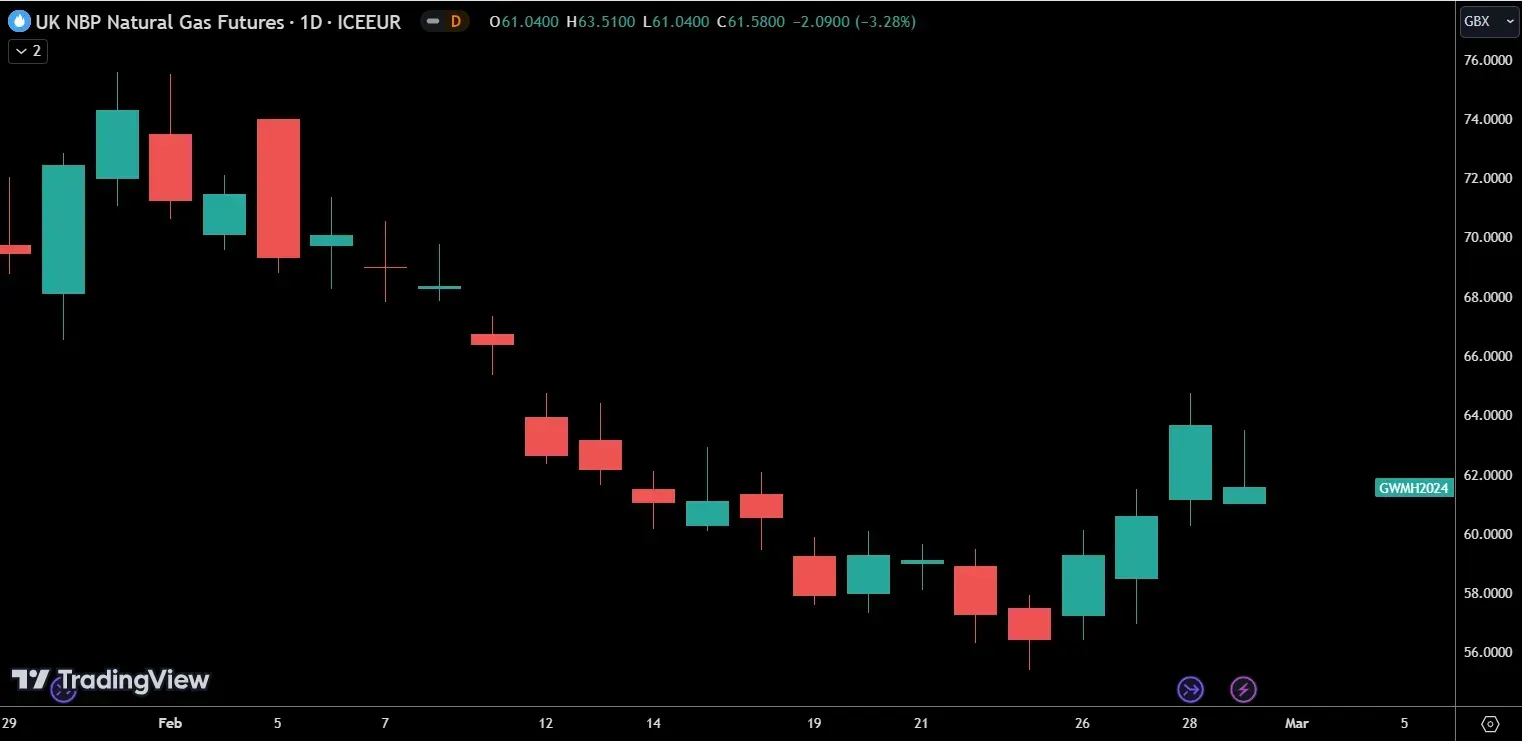
In what proved to be the wettest February in 258 years, we saw energy prices continue their downward trend. Electricity prices for the upcoming summer season fell approximately 20% in the first 3 weeks of the month before ending the month with a small rally in a pattern mirrored by the gas prices.

The energy markets saw prices pull back to levels not seen since 2021, although after 7 weeks of the price falling some counter movement was to be expected. For companies on flexible contracts who are looking to make purchases, the 2nd and 3rd weeks of February represented an ideal time to lock in prices as the market achieved a short-term bottom. The end of the month rise seems likely to be caused by parties looking to de-risk and lock in prices while they are at these lows. The downtrend could very well be set to continue after this period of de-risking, but there now appears to be a greater risk to the upside than there is potential for large decreases.


One of the primary reasons for this continued decline in price was the milder than expected weather in February. While it may have been wet, windy, and unpleasant, it wasn’t quite as cold as had been feared, which led to lower levels of gas consumption throughout the month.


The market also appears to have developed further resilience to negative news on the supply side. The first week of February saw a halt in exports from Norway’s Nyhamna processing plant. A power outage at the plant coincided with a compressor failure at the Troll gas field, which further reduced Norwegian export capacity. In the previous 3 years events such as this have caused sharp spikes in price. As recently as a few months ago, threats of industrial action at an Australian LNG plant caused prices to rise sharply. However, it seems faith has been restored in the UK’s ability to deal with some small supply-side shocks.


Part of this ability to deal with supply issues is related to decreased demand. Reports released in February showed that gas demand had decreased 20% across Europe since the Russia-Ukraine conflict began. Rising prices have made both individuals and businesses more conscious of how they consume energy, and consumption patterns have noticeably changed as a result.


One threat to the supply-side which may have an impact in the future is seabed warfare. Reports this month have highlighted attacks on subsea connections as a potential security threat to the UK. China and Russia were mentioned as countries that have sufficiently advanced technologies in this area, an area that the UK may be under-prepared for. Should we see seabed warfare increasingly occur, it could be a case that this becomes one of the major threats to the UK’s energy supply.


Outlook

As a result of the previously mentioned lower demand, UK reserve levels remain in a healthy state. As such there appears to be no need for large purchases to replenish these levels, which suggests the downtrend could be likely to continue into the summer months.


The conflict in the Red Sea still remains a risk. While we saw further Houthi attacks on commercial vessels this has yet to impact LNG exports out of the region. The threat of Lebanon and Iran being pulled into any escalating conflict should be a cause for concern though, and any developments will need to be monitored closely.


The end of month buying doesn’t appear to suggest a change in trend, merely some expected buy-back after a prolonged period of decline. This may continue into the first few days of March, or we may a slightly longer period of price stability, but it seems after this period, the decline in price will likely continue. For those with flexible contracts this month has presented good opportunities to make purchases, but further declines seem probable, albeit with there now being an asymmetrical element of risk should the market encounter a supply-side problem of significance.


If your business requires advice with its energy procurement, management, or planning, then don’t hesitate to contact Seemore Energy to speak to experienced advisors who can help you with bespoke strategies and advice that is tailored to your needs. 

New Paragraph

By Sharon Keevins December 4, 2025
October Review By Adam Novakovic In the month of Halloween, October energy price movements were free of jump-scares. Whilst prices moved up slightly at the start of the month, they marginally decreased throughout the remainder of October. Ending the month slightly below the levels seen at the end of September. The expectation this month was that European gas reserves would be the key story impacting energy prices. The European Network for Transmission System Operators for Gas (ENTSOG) released their report on the Winter supply outlook. This confirmed that Europe is well prepared for the coming winter, with 83 % gas reserves recorded as of the 1st of October, and infrastructure resilient enough to meet demand without Russian pipeline gas. Their projections had Europe ending the winter season with over 30% storage even in the most severe scenarios. There is also the expectation that any unforeseen supply disruptions can be mitigated through increased LNG imports -- supporting the EU’s goal of phasing out Russian gas while emphasising continually reducing demand. During the first week of October Russia launched a wave of drone attacks against Ukraine -- the largest since the war began. These strikes have damaged Ukrainian gas production and left storage at 42% of capacity. This has forced Ukraine to look at importing large quantities of LNG from Europe this winter. With the deal that brought Russian gas to Europe now expired, Europe faces added demand pressure. This comes despite Europe significantly reducing Russian gas imports and increasing LNG imports from other nations. With there currently being a large quantity of LNG available for importation, and with EU gas reserves being in a healthy position, it seems as though further conflict may not have a large impact on energy prices. This could change however if Europe were to experience a particularly cold winter.
By Sharon Keevins December 4, 2025
September Review By Adam Novakovic We have reached the time of year where the summer months have started to fade and we begin to think about the colder seasons. This month saw the UK government recognise Palestine as a country, although they still seem unable to recognise the harm their energy policies are causing UK businesses. With further charges set to be added to UK energy bills and rising non-commodity costs, it was a relief that wholesale energy prices remained fairly flat throughout September. A recent report from independent analysts Cornwall Insights revealed that large energy users who aren’t covered by Government schemes could find that they are paying a further £450,000/year in non-commodity costs by 2030. With non-commodity costs such as DUOS and TUOS charges –which are used to fund the infrastructure responsible for the transmission of electricity – now accounting for over 2/3rds of total electricity costs for some businesses, it is of growing concern that these charges are set to continue rising. With the TUOS charges for 26/27 expected to increase significantly , the non-commodity charges are starting to have a negative impact on UK businesses ability to compete against foreign businesses with fewer governmental charges on their energy bills. This growing concern is yet to be addressed but could have a huge impact on many industries in the next year.

Show More