

Sharon Keevins • December 4, 2025

February Review 2025

February Review

By Adam Novakovic

With consumer spending declining and OFGEM raising their price cap, you would be forgiven for seeing February as a month where negative news was at the forefront, but in the energy markets, this was not the case. 

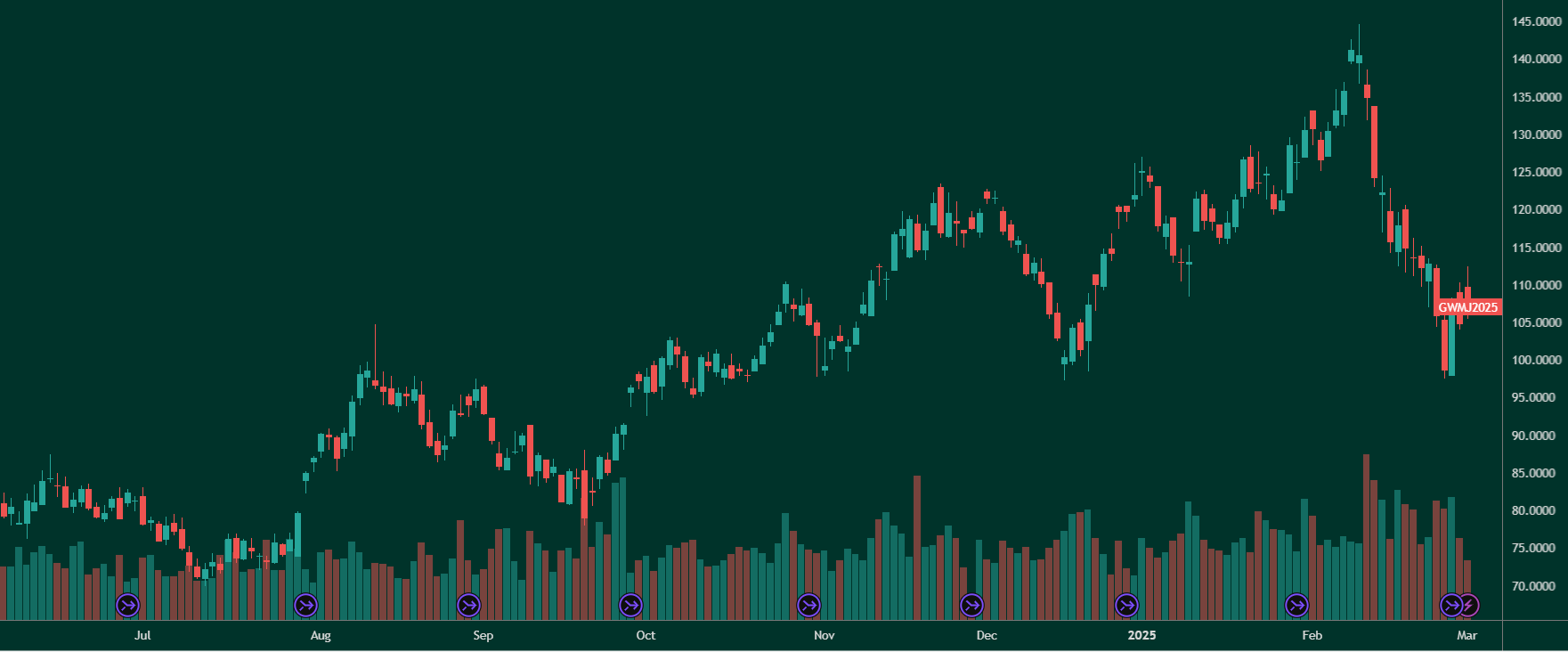
In the day ahead market, gas prices started the month at 134.5p/therm, peaking at 145.5p/therm on February 10th. However, they would end the month at 109.7p/therm, representing a 18.44% drop from the start of the month. These drops were seen across multiple markets with electricity for Summer’25 dropping 14.36% and gas prices dropping by 15.89% for the same period. The difference between the monthly high for Summer’25 Electricity (£107/MWh) and the monthly low (£82.23/MWh) is almost £25/MWh, which, for a business that consumes 5GW during the Summer, would equate to a difference of over £120,000.

This highlights the importance of timing when to arrange your future energy contracts and ensuring you are on the best tariff for your business. If you require any advice regarding how to get the best deal on your energy contracts, contact us at info@seemoreenergy.co.uk for free advice from experts with decades of experience in the UK energy markets.


January ended with fears surrounding European gas reserve levels and the impact mandated purchases would have on global gas markets. Some reprieve was offered in the form of above normal temperatures being forecast for February. Warm winds from the North Atlantic would bring drier and milder-than-usual weather for this time of the year, lowering the expected consumption for the month.


While the weather was a welcome short-term boost, numerous EU nations were pushing back on the mandated gas reserve levels which would inevitably force EU nations into bidding wars and raise the wholesale gas prices.

A group of nations, including Austria, France, Germany and the Czech Republic, requested that the gas reserve targets be relaxed. The rules, which require all EU nations have gas reserves at 90% of capacity by November 1st, are set to expire at the end of 2025, however, the European Commission have said they would like to extend the mandate.


After energy prices had steadily risen at the start of February, prices would drastically fall from the 12th. This was a result of the US beginning talks with Russia regarding the cessation of hostilities with Ukraine. Previously the US had been providing significant funds to Ukraine, allowing for a prolonged conflict. The prospect of a peace deal being achieved was enough to cause energy prices to fall. If peace could be achieved, it would seem highly likely that Russian gas could once again be sold to Europe and European nations would have an alternative to LNG shipments. 


This combination of EU demand potentially being lowered, and a possible large increase to the available gas supply led wholesale prices to drop almost 30% between the 12th and the 25th. However, OFGEM announced that the domestic price cap was set to rise by 6.4% in April, directly impacting households on variable tariffs and highlighting that there is still a negative sentiment within the energy industry.


Outlook

The energy markets look set to remain volatile in the short-term. Friday’s controversial encounter between Trump and Zelenskyy has only added to the uncertainty around any potential peace deal for Russia and Ukraine. If a cease fire could be agreed, then it seems highly probable that we will see further price decreases, but should we see the end of peace-talks, it seems almost certain that prices will quickly rise.

The European Commission has shown a willingness to be flexible in terms of intermediate gas reserve targets after the previously mentioned pushback. Further announcements, with concrete targets, are expected before the end of March. The levels of leniency shown by the commission will likely have a direct impact upon the wholesale prices.


With UK energy prices being kept high by a reliance on LNG, it seems as though there is now a renewed focus on moving away from Natural Gas. While renewables have not had the impact many had initially anticipated, nuclear energy remains the most reliable way of producing cheap, low-carbon energy. The government have indicated they are looking at smaller modular reactors as the quickest way to reduce energy costs in order to achieve their targeted energy prices by 2030. Whilst it would be years before there is any impact from new reactors, it offers some hope that the energy issues of the past few years may not be set to repeat, and UK energy prices won’t remain at the mercy of geopolitical events.


If your business requires advice with its energy procurement, management, or planning, then don’t hesitate to contact Seemore Energy to speak to experienced advisors who can help you with bespoke strategies and advice that is tailored to your needs. 

By Sharon Keevins December 4, 2025
October Review By Adam Novakovic In the month of Halloween, October energy price movements were free of jump-scares. Whilst prices moved up slightly at the start of the month, they marginally decreased throughout the remainder of October. Ending the month slightly below the levels seen at the end of September. The expectation this month was that European gas reserves would be the key story impacting energy prices. The European Network for Transmission System Operators for Gas (ENTSOG) released their report on the Winter supply outlook. This confirmed that Europe is well prepared for the coming winter, with 83 % gas reserves recorded as of the 1st of October, and infrastructure resilient enough to meet demand without Russian pipeline gas. Their projections had Europe ending the winter season with over 30% storage even in the most severe scenarios. There is also the expectation that any unforeseen supply disruptions can be mitigated through increased LNG imports -- supporting the EU’s goal of phasing out Russian gas while emphasising continually reducing demand. During the first week of October Russia launched a wave of drone attacks against Ukraine -- the largest since the war began. These strikes have damaged Ukrainian gas production and left storage at 42% of capacity. This has forced Ukraine to look at importing large quantities of LNG from Europe this winter. With the deal that brought Russian gas to Europe now expired, Europe faces added demand pressure. This comes despite Europe significantly reducing Russian gas imports and increasing LNG imports from other nations. With there currently being a large quantity of LNG available for importation, and with EU gas reserves being in a healthy position, it seems as though further conflict may not have a large impact on energy prices. This could change however if Europe were to experience a particularly cold winter.
By Sharon Keevins December 4, 2025
September Review By Adam Novakovic We have reached the time of year where the summer months have started to fade and we begin to think about the colder seasons. This month saw the UK government recognise Palestine as a country, although they still seem unable to recognise the harm their energy policies are causing UK businesses. With further charges set to be added to UK energy bills and rising non-commodity costs, it was a relief that wholesale energy prices remained fairly flat throughout September. A recent report from independent analysts Cornwall Insights revealed that large energy users who aren’t covered by Government schemes could find that they are paying a further £450,000/year in non-commodity costs by 2030. With non-commodity costs such as DUOS and TUOS charges –which are used to fund the infrastructure responsible for the transmission of electricity – now accounting for over 2/3rds of total electricity costs for some businesses, it is of growing concern that these charges are set to continue rising. With the TUOS charges for 26/27 expected to increase significantly , the non-commodity charges are starting to have a negative impact on UK businesses ability to compete against foreign businesses with fewer governmental charges on their energy bills. This growing concern is yet to be addressed but could have a huge impact on many industries in the next year.

Show More