

Sharon Keevins • December 3, 2025

October Review 2023

October Review

By Adam Novakovic

Energy Markets Consultant

As we pack away our Halloween decorations for another year, there appears to be more shocks and scares lurking in the world of energy. October was a month which saw man-made atrocities dominate the headlines, and it seems likely that global conflicts will once again be a significant catalyst in the energy markets.


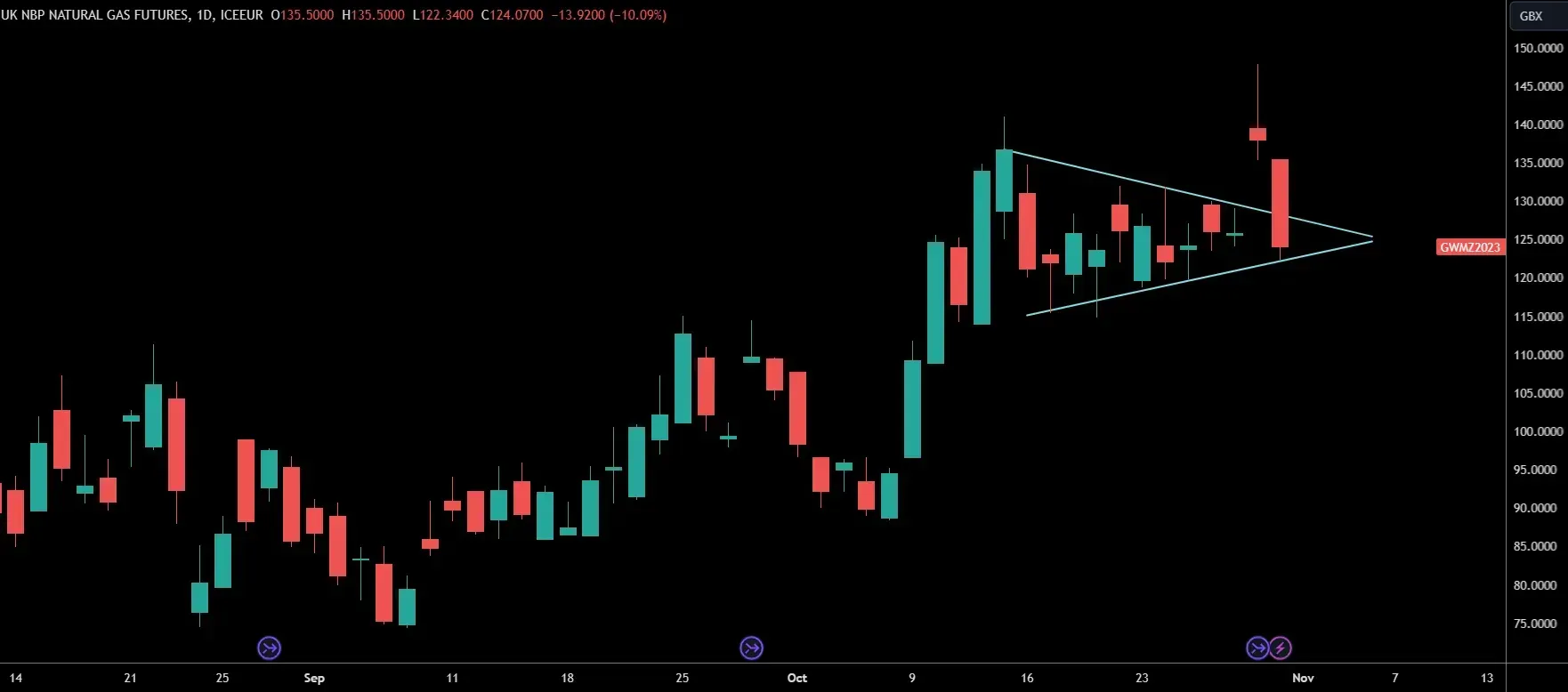
Wholesale gas prices hit their highest levels since March, and the charts seem to be currently forming a pennant. In classical charting, a pennant/flag is normally a pre-cursor to another significant upward impulse. If this particular pennant plays out this way, then we can expect to see prices return to levels not seen since January.

The major news story this month has been the conflict between Israel and Palestine. Shortly after the first reports broke, we saw oil prices jump 4% and gas prices rise shortly after. While neither nation is a large producer of gas or oil (Israel does produce some LNG), a lot of the fears are related to the conflict spreading further across the region. Earlier this month we released a video identifying how developments in the Middle East could possibly lead to further rises in the prices of energy.  Ultimately, should the conflict continue, and should surrounding nations become involved, it will become likely that shipping routes in the region become less accessible. This would be particularly negative for UK energy prices, seeing as how the UK’s main supplier of LNG is Qatar, who rely on the Strait of Hormuz shipping route to export their LNG.


Another threat to the supply of gas this month came when Finland announced that there had been damage to the Baltic Interconnector pipeline. This pipeline connects Finland and Estonia, and had been transporting 30 GWh/day of gas before the disruption. It is expected that this disruption will not cause shortages in either country due to the significant reserve supplies that have been built up in the region. It has, however, been announced that it will likely take until April of next year for the pipeline to be repaired. While investigations into the cause are ongoing, it seems likely that this was caused by the anchor of a Russian-owned, Chinese cargo vessel. The incident occurred approximately one year after an attack on the Russian state-owned Nordstream pipelines.


In more positive news, strike action that had previously threatened Chevron’s Australian LNG plants have now been dismissed. The unions behind the strike action have now endorsed the new deal tabled by Chevron and it seems unlikely there will be any industrial action at these plants for the foreseeable future.


Outlook

After conflicting reports from industry experts -- with Drax stating electricity costs are likely to be reduced due to lessor BSuoS costs, and Cornwall Insights suggesting prices will rise as a result of increasing wholesale prices – there appears to be a lack of consensus about where prices will go in the medium term. One thing that is becoming apparent though, is that threats of damaged pipelines and conflict in the Middle East aren’t the only factors likely to have an impact on energy prices.


China has seen a growth in demand for LNG in 2023. While this demand can initially be met by domestic gas production, should it continue, we may see the LNG market become more competitive. With global production expected to remain relatively flat over the next few years, any increase in demand will likely need to be met by existing sources, which could create a small-scale bidding war. If this is then coupled with difficulties in shipping LNG to some locations, it could have a very detrimental impact on regional energy prices.       


The World Bank has warned that, if the conflict in the Middle East is to spread, and the Russia/Ukraine conflict persists, we could see a dual energy shock. This would be the first of its kind in decades and would likely have a significant negative impact on energy prices globally.


In the UK, we are now getting a clearer picture of how the weather will look this winter as long-range forecasts have predicted that the impact of El Niño will likely see icy blasts and falling temperatures in December. Last winter was a mild one for most of Europe, but that now seems unlikely to be the case for the coming winter.


With the list of potential negative catalysts growing, it does seem as though now me be an opportune time to lock in some prices and guarantee peace of mind. It should be remembered however, that European gas reserve levels are near to capacity and that Norway has been increasing their gas export levels – factors which should mitigate some negative supply news. For those on flex contracts, we would look at hedging a % for the coming winter and keeping a close eye on the catalysts most likely to drive prices up. If there were to be news further impacting gas imports to Europe, we could see a large, fear-driven spike in wholesale prices, and it seems as though the potential for negative events occurring is higher than at any previous point this year.


If your business requires advice with its energy procurement, management, or planning, then don’t hesitate to contact Seemore Energy to speak to experienced advisors who can help you with bespoke strategies and advice that is tailored to your needs. And if you would like to receive our monthly analysis directly into your inbox each month, sign up for our free reports here.

By Sharon Keevins December 4, 2025
October Review By Adam Novakovic In the month of Halloween, October energy price movements were free of jump-scares. Whilst prices moved up slightly at the start of the month, they marginally decreased throughout the remainder of October. Ending the month slightly below the levels seen at the end of September. The expectation this month was that European gas reserves would be the key story impacting energy prices. The European Network for Transmission System Operators for Gas (ENTSOG) released their report on the Winter supply outlook. This confirmed that Europe is well prepared for the coming winter, with 83 % gas reserves recorded as of the 1st of October, and infrastructure resilient enough to meet demand without Russian pipeline gas. Their projections had Europe ending the winter season with over 30% storage even in the most severe scenarios. There is also the expectation that any unforeseen supply disruptions can be mitigated through increased LNG imports -- supporting the EU’s goal of phasing out Russian gas while emphasising continually reducing demand. During the first week of October Russia launched a wave of drone attacks against Ukraine -- the largest since the war began. These strikes have damaged Ukrainian gas production and left storage at 42% of capacity. This has forced Ukraine to look at importing large quantities of LNG from Europe this winter. With the deal that brought Russian gas to Europe now expired, Europe faces added demand pressure. This comes despite Europe significantly reducing Russian gas imports and increasing LNG imports from other nations. With there currently being a large quantity of LNG available for importation, and with EU gas reserves being in a healthy position, it seems as though further conflict may not have a large impact on energy prices. This could change however if Europe were to experience a particularly cold winter.
By Sharon Keevins December 4, 2025
September Review By Adam Novakovic We have reached the time of year where the summer months have started to fade and we begin to think about the colder seasons. This month saw the UK government recognise Palestine as a country, although they still seem unable to recognise the harm their energy policies are causing UK businesses. With further charges set to be added to UK energy bills and rising non-commodity costs, it was a relief that wholesale energy prices remained fairly flat throughout September. A recent report from independent analysts Cornwall Insights revealed that large energy users who aren’t covered by Government schemes could find that they are paying a further £450,000/year in non-commodity costs by 2030. With non-commodity costs such as DUOS and TUOS charges –which are used to fund the infrastructure responsible for the transmission of electricity – now accounting for over 2/3rds of total electricity costs for some businesses, it is of growing concern that these charges are set to continue rising. With the TUOS charges for 26/27 expected to increase significantly , the non-commodity charges are starting to have a negative impact on UK businesses ability to compete against foreign businesses with fewer governmental charges on their energy bills. This growing concern is yet to be addressed but could have a huge impact on many industries in the next year.

Show More