1 May 2026

April 2026 Review

April was a month where the energy markets offered sources of optimism but failed to follow through in a meaningful way. A peace deal in the Middle East seemed within touching distance, but the conflict will now continue into May, leaving markets clouded by uncertainty.


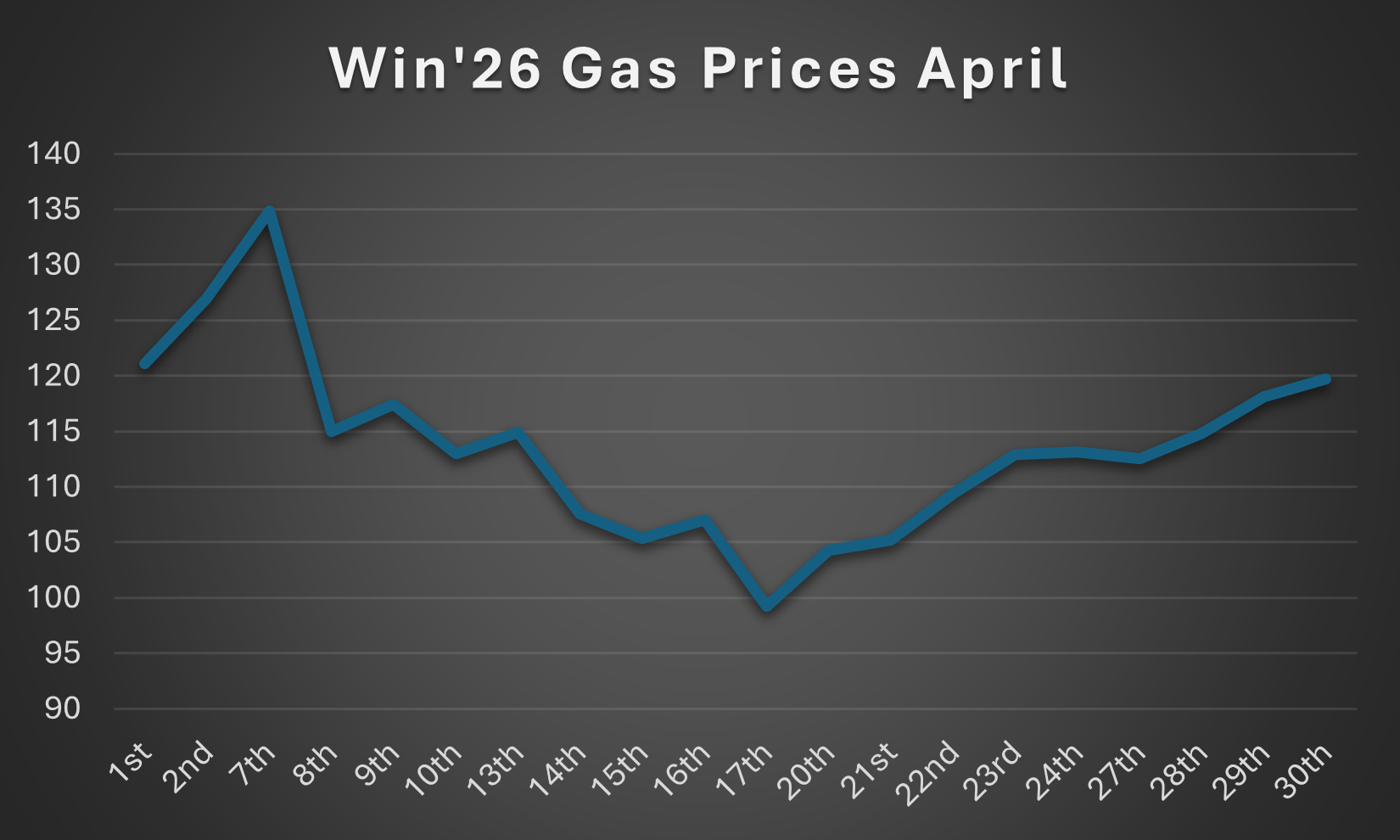
UK gas prices for the upcoming winter peaked in the first week of the month. Prices then fell when it seemed likely that an agreement could be reached between the US and Iran. As peace talks were delayed -- and amidst inconsistent messages from the US leadership -- prices began to rise again – reaching a price level almost on a par with the beginning of April.

The war between the US/Israel and Iran had begun at the end of February. The conflict led to the Strait of Hormuz – where over 20% of the world’s LNG exports travel through – being shut down, with safety concerns amid threats to cargo ships from Iran – and later the US. In the days following the commencement of the war, gas and electricity prices spiked. They have since come down from their high point but are yet to return to their pre-war levels.


On April 8th, a ceasefire was announced. This led to falling energy prices as most market participants assumed a peace-deal could be established within days. However, mixed public statements from the US have led to uncertainty about just how quickly a deal can be reached. The more time that passes without an agreement being achieved, increases the probability of a resumption of hostilities and prolongs the timeframe in which the Strait of Hormuz can reasonably be expected to re-open.


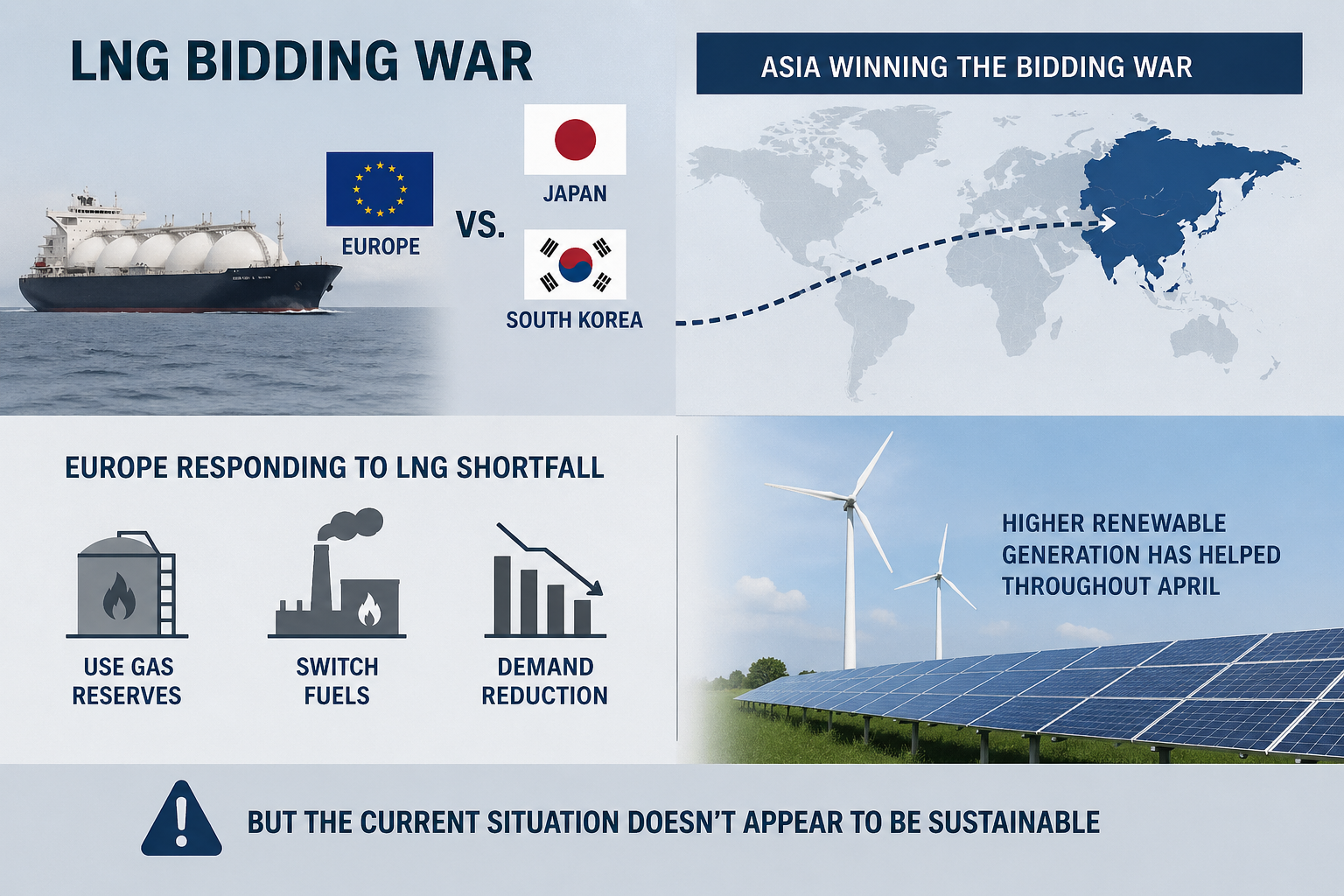
With limited LNG available for export, European nations have been locked in a bidding war with many Asian nations. So far, Japan and South Korea have been winning the bidding war. This has forced may European nations to look to further use their gas reserves, switch fuels, and engage in demand-reduction measures where necessary. Higher than expected renewable generation has helped throughout April, but the current situation doesn’t appear to be sustainable.   

This is paragraph text. Click it or hit the Manage Text button to change the font, colour, size, format and more. To set up site-wide paragraph and title styles, go to Site Theme.

by Craig Watson 27 March 2026
With consumer spending declining and OFGEM raising their price cap, you would be forgiven for seeing February as a month where negative news was at the forefront, but in the energy markets, this was not the case.
by Craig Watson 27 March 2026
In a year that began with falling energy prices, there were recurring catalysts that led to prices climbing steadily higher. Geopolitical uncertainty and the perennial threat of escalating conflicts meant fear would maintain a constant presence in the wholesale markets. We will look back at the key energy stories from 2024, and how the energy markets are likely to shape up in 2025. Quarter 1  The year began with cautious optimism as the UK’s gas reserve levels were healthy and prices for the Summer’24 season were in freefall. In February, prices pulled back to their lowest levels since 2021, and for the first time in a while, we identified that there was greater potential for upside risk than for further downward price movement: “ there now (exists) an asymmetrical element of risk should the market encounter a supply-side problem of significance. ” During February we had advised customers on flexible contracts that this was an ideal time for making purchases. March would see prices begin to ascend again as international conflict would create problems with LNG imports, and we would highlight the geopolitical risks as an area for concern moving forwards: “ fears remain and there are potential negative catalysts that could lead to prices rising further, with the main factors to watch out for being based on geopolitical unrest. “ For a business that purchases their energy in advance, this quarter was the optimal time for purchasing during 2024. In February, electricity prices for Winter’25 were down to 7.75p/Kwh, and as low as 6.05p/Kwh for Summer’25. Winter’25 ended the year with prices above 11.1p/Kwh, with Summer’25 prices exceeding 9p/Kwh. For a company that uses 500,000Kwh of electricity per month, the difference between buying at the February low point compared to today’s prices would represent a yearly saving of over £200,000.
Show More