Craig Watson • May 12, 2023

Understanding Your Energy Bill: Use of System Charges

Use of System Charges Explained: What Are DUoS, TNUoS and BSUoS Charges?

When reviewing a UK business electricity bill, you may notice several unfamiliar network charges. These are known as Use of System charges and are a major component of non-energy costs.

The three main charges are:


Below, we explain what DUoS charges are, what TNUoS charges are, and what BSUoS charges are, why they appear on your bill, and whether they can be managed or reduced.


What Are DUoS Charges?

DUoS charges (Distribution Use of System charges) are applied by your local Distribution Network Operator (DNO). They cover the cost of transporting electricity from the national grid to your business premises using the local distribution network.

DUoS charges usually include two elements:


1. DUoS Standing Charge

This is a fixed daily charge that reflects:


  • The size of your electricity connection
  • The cost of maintaining and operating the local network


It applies regardless of how much electricity you use.


2. DUoS Unit Charges (Red, Amber, Green)

These charges vary depending on the time of day and local network demand:


  • Red – peak demand periods (highest cost)
  • Amber – medium demand periods
  • Green – low demand periods (lowest cost)


On average:

  • Red charges can be 50 times higher than amber
  • Red charges can be up to 450 times higher than green


These time-of-use charges are designed to encourage businesses to shift consumption away from peak periods.


Can DUoS Charges Be Reduced?

While DUoS charges can’t be removed, they can often be managed:


  • Monitor when electricity is used
  • Shift energy-intensive processes to off-peak periods
  • Use half-hourly data to understand demand patterns


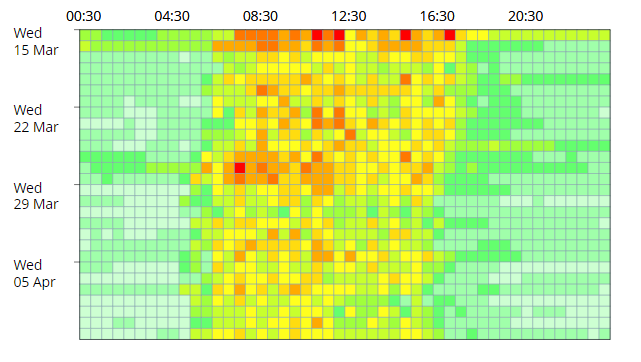
For businesses with half-hourly meters, energy monitoring tools -- such as an electricity footprint report -- can clearly show when and how DUoS charges are being triggered.


 Example of a one-month energy footprint report


What Are TNUoS Charges?

TNUoS charges (Transmission Network Use of System charges) are applied by National Grid. They cover the cost of operating and maintaining the high-voltage transmission network that moves electricity from power stations to local distribution networks.


Key features of TNUoS charges:


  • Charged at a fixed rate per kWh
  • Typically billed annually or seasonally
  • Based on total electricity consumption


Although less visible than DUoS, TNUoS charges can represent a significant cost for larger electricity users.


What Are BSUoS Charges?

BSUoS charges (Balancing Services Use of System charges) recover the costs incurred by National Grid to balance electricity supply and demand in real time.


These charges ensure:


  • System stability
  • Grid security
  • Continuous electricity supply


BSUoS charges are:

  • Calculated based on your share of total electricity demand
  • Highly variable
  • Influenced by renewable generation levels, weather, and system events


Understanding what DUoS charges are, what TNUoS charges are, and what BSUoS charges are gives businesses greater clarity over non-energy costs on their electricity bills.

While these charges are unavoidable, better visibility of usage patterns, contract structure, and consumption timing can help businesses manage and, in some cases, reduce overall costs.


Need Help Understanding Your Electricity Charges?

If you’d like help reviewing your electricity bill, understanding Use of System charges, or receiving advice on securing the best deal when renewing your contract, please contact our team:


📧 admin@seemoreenergy.co.uk


We’re happy to provide clear, independent guidance to help you take control of your business energy costs.

By Craig Watson March 27, 2026
By Adam Novakovic With the frenetic pace of the Christmas season and thoughts about whether the presents have been wrapped, if all of the Amazon parcels have arrived, and concerns over the turkey being sufficiently sized for the entire family, you may be forgiven for not having taken the time to track the energy markets this December. In our final monthly review of 2025, we will aim to bring you up to speed with how the energy markets are developing and what impact this is likely to have on British businesses.
By Craig Watson March 27, 2026
With consumer spending declining and OFGEM raising their price cap, you would be forgiven for seeing February as a month where negative news was at the forefront, but in the energy markets, this was not the case.
Show More