

31 May 2026

By Adam Novakovic

May saw temperatures soar as many dusted off their barbecues, while others headed to the parks and beer gardens to make the most of the unseasonably warm weather. In the energy markets, a much-anticipated peace-deal failed to materialise as the conflict between The US/Israel and Iran looks set to continue into the summer months.

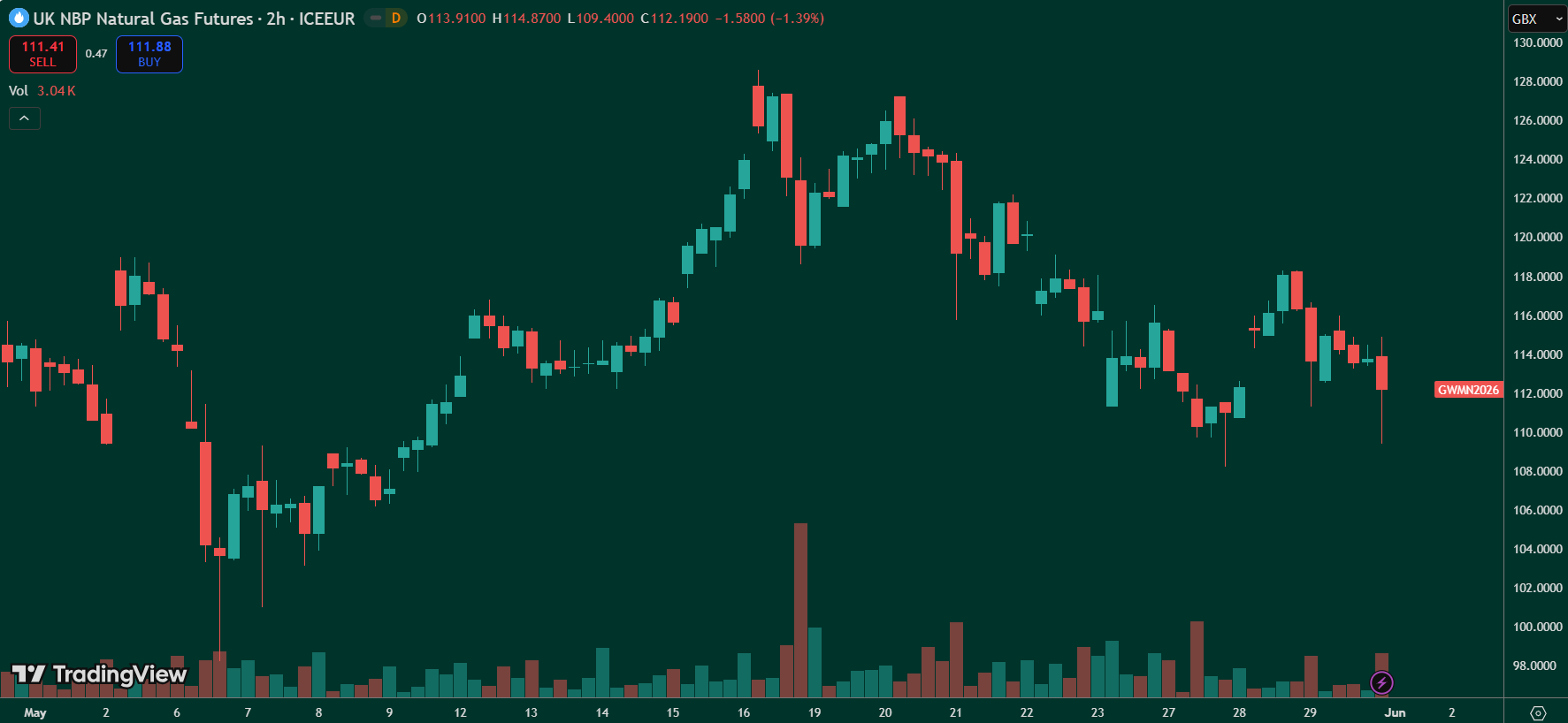
The month started with wholesale prices dropping as a response to increased optimism surrounding a peace-deal. However, when this failed to materialise and it became apparent that a deal wasn’t close to being finalised, prices rose again before settling at a similar level to how they began the month.


In the first week of May, the US announced naval operations designed to escort merchant ships through the Strait of Hormuz. Combined with the ceasefire, this led to a growing confidence in the market that the shipping disruptions witness in March and April could soon be behind us.

As the month progressed, it became clear that negotiations had become deadlocked with both sides seemingly willing to wait for the other to blink first. With the US recently adding further sanctions against Iranian oil sales, it seems as though we may be no closer to a peace-deal than we were at the end of April.


As a direct result of the extended instability regarding LNG exports from the Middle East, OFGEM have raised their price cap by 13% from July 1st. This is a clear indication that prices are not expected to come down in the coming months, although, this narrative could quickly change should there be positive news out of the Gulf.

While there is a lack of positive news regarding the UK’s gas imports, renewable energy generation was a different story entirely. Since the Iran war began, the UK has seen record generation from both wind and solar sources. It is estimated that this has saved over £2bn in LNG purchases, and this level of renewable generation is responsible for gas and electricity prices not being significantly higher than their current levels.


A report published by Ernst & Young this month revealed that higher energy prices have reduced The UK’s GDP by approximately £30bn. Energy Intensive sectors have been particularly impacted by the rising gas and electricity costs, causing harm to large parts of the industrial base. The government has tried to introduce various schemes to help energy-intensive industries, but it is becoming clear they are not sufficient, and that British manufacturers are finding it increasingly difficult to compete with their continental counterparts.

If your business is struggling to cope with rising energy costs, contact us today, and we will conduct a free review to see if you are eligible for any existing government grants or schemes, as well as seeing if there are any actions that can be taken to reduce your current energy spend.


Outlook

While renewable energy generation has helped cushion the blow of inflated LNG prices, The UK remains vulnerable to any potential supply shocks. We could see large price spikes in the coming months should there be any unexpected outages or disruption involving Norwegian gas production.

The volatile LNG market could see prices rise further as a result of an El Niño weather pattern causing heatwaves in Asia. China is already the world’s largest LNG importer, but higher-than-usual temperatures would lead to increased air conditioning usage and greater demand on electricity grids throughout East Asia. In previous years, this weather pattern has led to increased LNG prices as demand intensifies.


European gas reserves are currently around 20-30% lower than is normal for this time of year. With the price shock experienced since the end of February, many nations have been delaying replenishing their reserves. However, with EU nations mandated to achieve their capacity goals by November, there could be a time where many nations are forced to enter the market at the same time, potentially causing further spikes in price.


One potential resolution to the impending LNG bidding war could be the lifting of the embargo on Russian gas purchases. With the infrastructure already in place, it would be a common sense solution. The US has recently extended their sanction waiver against the US, and the UK has also eased sanctions on Russian crude in order to obtain quantities of jet fuel. Should this occur, there would be an almost instant drop in gas and electricity prices, it just remains to be seen whether the European political class are willing to prioritise the rising expenses of their citizens and businesses over their ongoing war in Ukraine.


If your business requires advice with its energy procurement, management, or planning, then don’t hesitate to contact Seemore Energy. Our experienced advisors can help you with bespoke strategies and advice that is tailored to your needs.


Recent Case Studies