27 May 2026

The Network Charging Compensation (NCC) Scheme

The Network Charging Compensation Scheme (NCC)

For many UK businesses, rising electricity costs remain one of the biggest pressures on profitability and competitiveness. While wholesale prices often dominate headlines, network charges have been rising sharply and make up a larger percentage of energy spend than ever before. This is particularly true for energy-intensive industries.


The Network Charging Compensation Scheme (NCC) was introduced with a goal of providing eligible businesses with compensation against specific electricity network costs. However, despite the potential savings available, many organisations are either unaware of the scheme or unsure whether they qualify.


For businesses with high electricity usage, the NCC could provide substantial financial relief and improve long-term competitiveness.


Why Was the NCC Introduced?

The UK government introduced the Network Charging Compensation Scheme as part of a broader effort to support energy-intensive industries (EIIs) facing increasing international competition and high domestic energy costs.


Many UK manufacturers compete globally against businesses operating in countries with lower energy costs and lower network-related charges. Without support mechanisms, these costs can make British industry less competitive.


The NCC was designed to compensate eligible businesses for a proportion of specific electricity network charges -- helping reduce the disparity between UK energy costs and those faced by overseas competitors. The scheme complements other forms of support available to qualifying industries, including the IETF, the ESL, and the ETII Exemption Scheme.


What Are the Benefits of the NCC?

The primary benefit of the scheme is straightforward: lower electricity costs.


Eligible businesses can receive compensation against Contracts for Difference, Renewables Obligation (RO), Feed-in Tariffs (FIT), and costs related to the Capacity Market. For a business consuming 4,000,000kWH of electricity per year, this can lead to annual savings of £225,000.


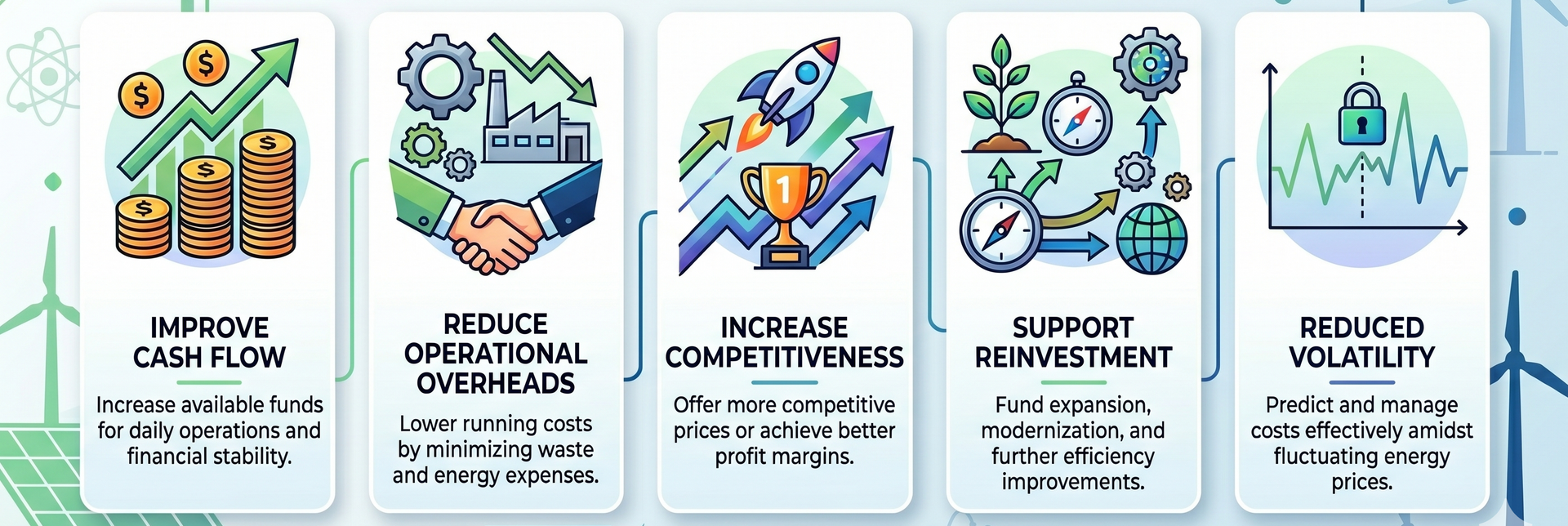
The NCC can allow businesses to:

Who Is Eligible?

Eligibility for the Network Charging Compensation Scheme is primarily focused on energy-intensive industries.


Typically, businesses must operate within qualifying sectors, mostly linked to manufacturing or industrial activities exposed to international competition with eligibility assessed using SIC (Standard Industrial Classification) codes alongside electricity intensity measures.


However, eligibility is not always straightforward. Many businesses incorrectly assume they do not qualify, while others may overlook subsidiary sites, mixed-use operations, or changes in qualifying criteria.

This is why a professional review can be highly valuable. A detailed assessment of your business activities, electricity usage, and billing structure can help identify whether opportunities exist under the scheme.


How Do Businesses Apply?

Applying for the NCC involves gathering supporting evidence and applying via the appropriate government process.

Businesses need to provide:


  • Company information
  • Evidence of qualifying industrial activity
  • Electricity consumption data
  • Financial and operational documentation
  • Meter and supply details


The process can be time-consuming, particularly for businesses operating across multiple sites or with complex energy arrangements. Inaccurate or incomplete submissions may also delay approvals or reduce the level of compensation received.


Is Your Business Entitled to Potential Savings?

Many UK businesses are unknowingly overpaying for electricity network charges simply because they have never reviewed their eligibility for schemes such as the NCC.


At SeeMore Energy, we help British businesses identify energy-saving opportunities, navigate complex support schemes, and reduce overall energy costs through expert procurement and consultancy services.


If your business has high electricity usage, now is the ideal time to review whether you could benefit from the Network Charging Compensation Scheme. Even if you are unsure about eligibility, a professional assessment could uncover substantial savings opportunities.

Contact SeeMore Energy today to discuss your energy costs and find out whether your business could benefit from the NCC and other available support schemes.

1 July 2026
This June saw a record-breaking heatwave and the commencement of an expanded World Cup, but it wasn’t just football and tropical temperatures that were a cause for celebration. This month also saw the re-opening of the Strait of Hormuz as the US and Iran brokered a tentative peace-deal that sent waves of relief across volatile global energy markets.
31 May 2026
By Adam Novakovic May saw temperatures soar as many dusted off their barbecues, while others headed to the parks and beer gardens to make the most of the unseasonably warm weather. In the energy markets, a much-anticipated peace-deal failed to materialise as the conflict between The US/Israel and Iran looks set to continue into the summer months.