

July 2026 Review
By Adam Novakovic
The month’s energy market movements offered parallels to the England football team: July began with great optimism but that was shattered with many questioning the judgement and integrity of officials. The ceasefire between Iran and the US was broken leading to a resumption of hostilities and a disruption to global trade routes. The impact of this on gas and electricity costs will be felt for months to come, and events in the Middle East look set to dictate energy prices for the foreseeable future.

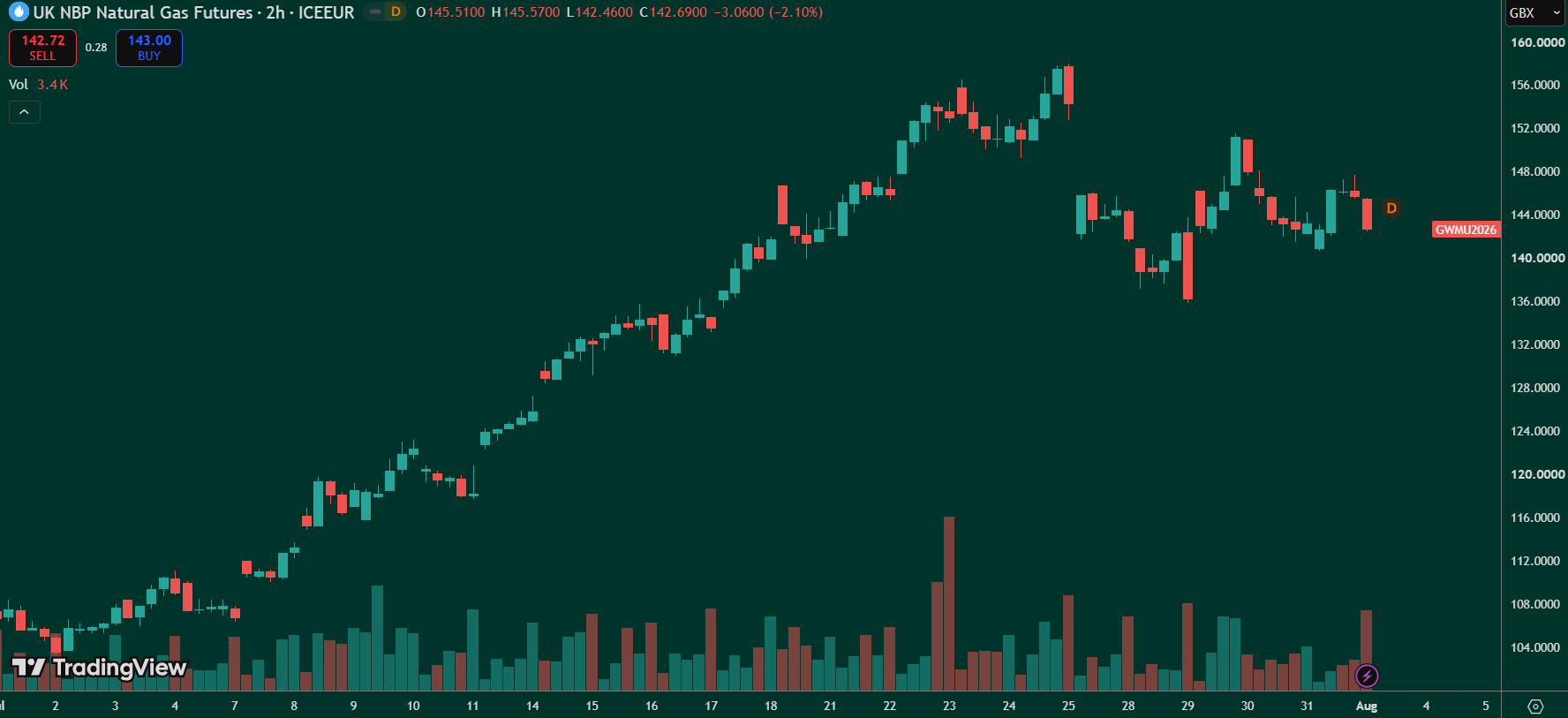
July saw wholesale prices spike by 50% before dropping slightly as fresh hopes of peace talks re-emerged. While this level of price rise isn’t directly passed on to end users, we have seen prices rise across future seasons as far ahead as Winter’28, which saw gas prices rise almost 10% over the course of the month. For those looking to obtain renewals in the coming weeks, prices will be higher than they were a month ago, with suppliers looking to spread risk across longer-term contracts as long as there is uncertainty about how long the US-Iran conflict will last.
While there was an expectation that the Memorandum of Understanding (MOU) signed in June would lead to a binding peace deal, problems occurred early on. Immediately after the signing, Israel had broken the terms of the deal through continued attacks on Lebanon. The Iranians were further perturbed by the US not releasing funds they had agreed to unfreeze as part of the deal. This led to Iranian strikes on shipping vessels that were not following their pre-approved routes. On the 8th of July the US then recommenced airstrikes against Iran which led to Iranian retaliations against the regional partners of the US. This halted the progress that had been made to allow ships to resume using the Strait of Hormuz to transport oil and LNG.
After two weeks of continued hostilities, the US voluntarily ceased launching missiles on the 25th, citing a desire to open a path to further peace talks. With other nations in the region applying pressure on both sides to resume peace talks and seek a deal, it seems likely that progress can be made. This was further supported by Donald Trump saying that they were engaging in “very friendly” negotiations which had a “good chance” of leading to a deal.

A major impact of the limited global LNG exports has been that EU gas reserve levels are significantly behind their expected capacity levels. They are currently around 55% full, when they would typically be closer to 70% at this time of year. The mandated reserve levels are 90% by November 1st, but this comes with a caveat that allows the levels to be 80% when circumstances necessitate some flexibility. With intense competition for the available LNG cargoes, nations such as Germany and France have struggled to purchase the required gas to replenish their reserves. It remains to be seen whether the EU will allow further flexibility, or whether the nations whose reserves lag behind will be forced into buying their reserves at uncompetitive rates. As things stand, there is the possibility that a colder-than-seasonal start to winter could have an amplified effect on the market and drive prices up further.
In the UK there has been further scrutiny over government schemes and how there is a lack of assistance for businesses struggling with energy costs. Energy UK published a report arguing that existing schemes leave 2.7 million businesses without meaningful help. It called for immediate action at the Autumn Budget, including removing RO and FIT costs from all business electricity bills and eliminating the Climate Change Levy (CCL) on electricity. The government responded by defending the British Industrial Competitiveness Scheme (BICS), Supercharger and sector packages while saying it remains in close contact with business on the challenges.
For smaller businesses that are eligible to pay domestic VAT rates, there was some relief this month as domestic energy VAT rates were cut from 5% to 0%.
If your business requires advice or assistance regarding your VAT rates or checking eligibility for government schemes, contact us today. Our experienced team of professionals can help ensure your business isn’t paying a penny more than necessary on your gas and electricity bills.
Outlook
The state of the war in the Middle East will be the primary driver of energy prices for the coming months. If an agreement can be reached to allow cargo vessels to transit the Strait of Hormuz then we will see prices fall for both the short and long-term.
With the precarious European gas reserve situation, long-term weather forecasts will be more important than in recent years. A colder than expected winter could have a large impact on energy prices as nations are forced to compete for the limited available gas. Current forecasts are suggesting a milder-than-usual winter, but long-term forecasts are notoriously unreliable and prone to change as we move closer to the winter months.
For British businesses looking for support with their electricity costs, the BICS application window will be open from October 1st – November 30th. For eligible businesses, this can offer relief from a host of levies currently applied to their invoices. We are currently offering no obligation consultations to check your eligibility and advise on what is required for your application. With the application window being just 2 months, make sure your business doesn’t miss out on this opportunity to reduce energy costs.