1 September 2026

August 2026 Review

August Review

Energy Markets Specialist: Adam Novakovic


As domestic football returned, so did familiar narratives in the energy markets. War in the Middle-East and European nations scrambling to meet their mandated gas reserve levels pushed prices up. While outages at Norwegian gas fields only added to the supply-side issues.


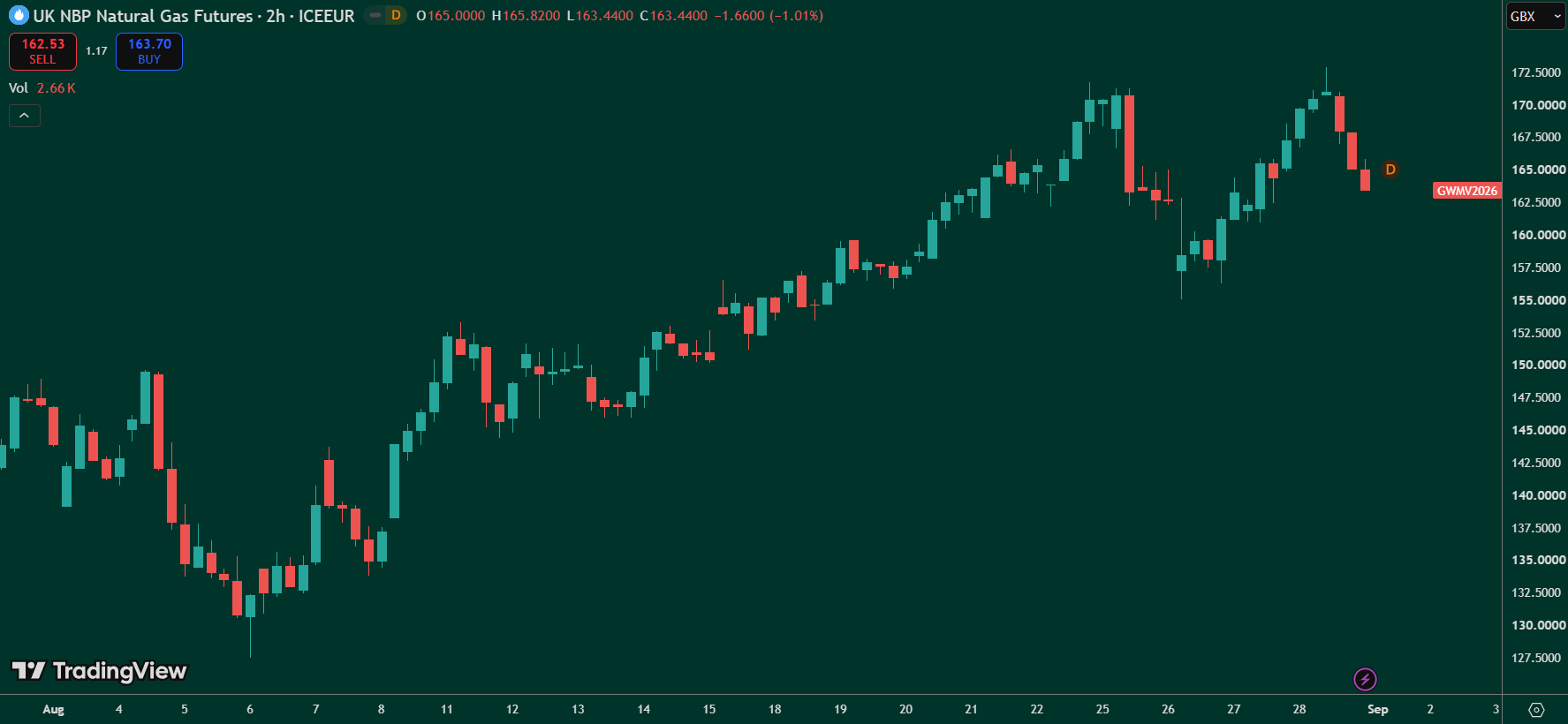
Wholesale gas prices climbed steadily throughout the month as supply-side risks accumulated. Prices for the upcoming Winter season rose faster than any other period, with the markets still believing that the price rises we are seeing shouldn’t carry a significant risk beyond the next 12 months. For those looking to renew their contracts in the coming months, they will likely find that shorter-term contracts will be the least favourable, with the perceived risk being front-loaded.


The primary reason for the prices rising was the escalation in the US-Iran conflict throughout August. Multiple military confrontations and heightened security threats around the Strait of Hormuz led to increasing concern over shipping corridors. While the US had sought to create a safer shipping lane off the coast of Oman, these attempts proved to have limited success.

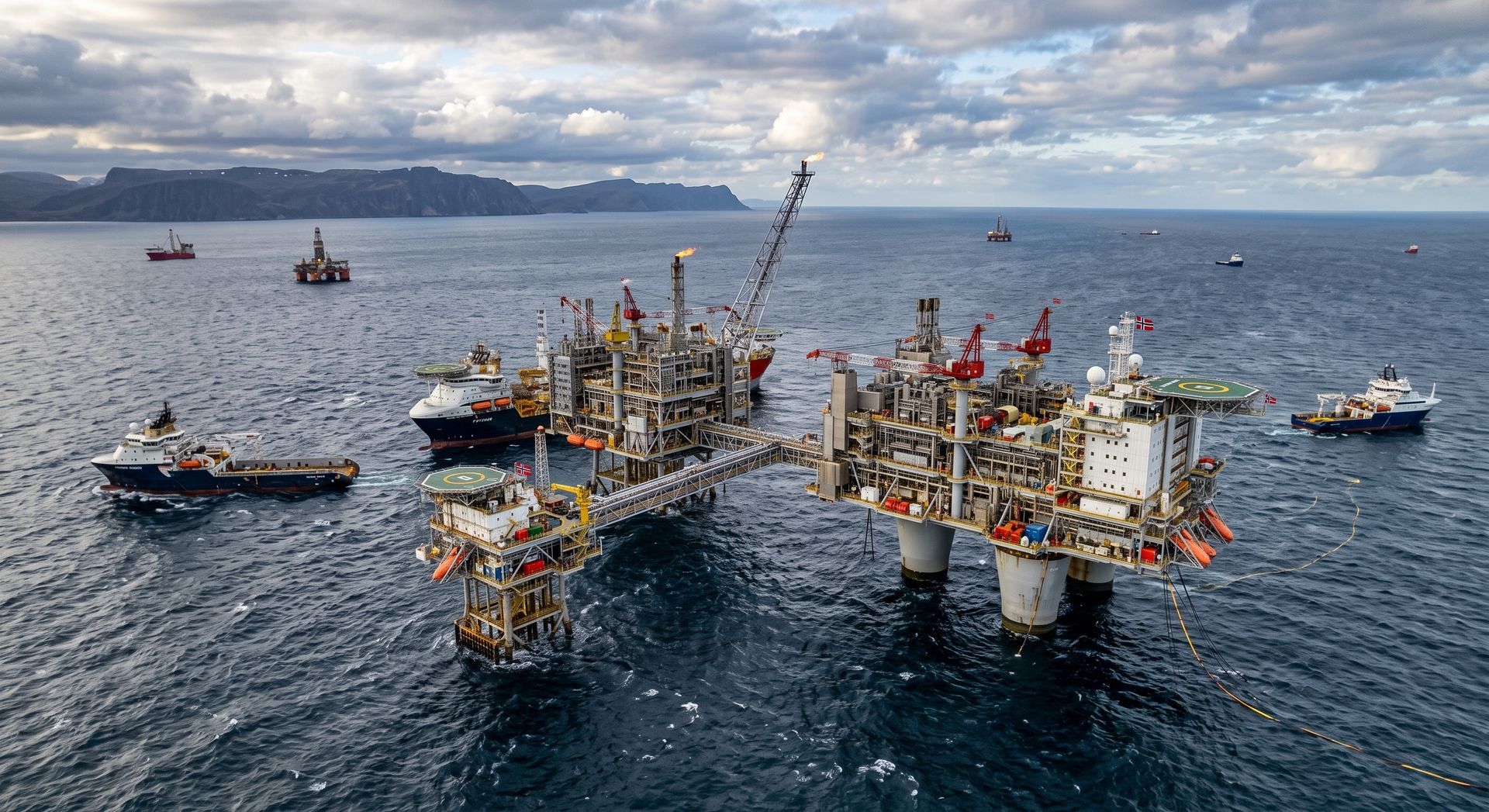
With imports from the Middle East still being problematic, pipeline gas imports from Norway have become increasingly important. However, these imports are not immune to their own set of problems. A major compressor failure at the Nyhamna processing facility forced Shell to restrict output from the Ormen Lange gas field by 40%. Later in the month, an unplanned outage at Norway’s Karsto gas processing plant further reduced Norwegian gas production capacity. Alongside broader seasonal maintenance across the Norwegian continental shelf, this unplanned outage further reduced pipeline flows into the UK and contributed to the rising gas and electricity prices.


Meanwhile, the European Union confirmed that underground gas storage facilities were at their lowest levels in 13 years. In 2025, the gas reserves had been around 80% full by the end of August, but this year they are reported to be at just 63% capacity. This could leave many European nations vulnerable to winter price volatility, particularly if there are extreme weather conditions or colder-than-expected temperatures.


Many UK businesses are paying over 45% more for their energy than the G7 average, according to a report from the Confederation of British Industry (CBI). The CBI highlighted that British businesses continue to pay substantially more for electricity than their international competitors, warning that elevated utility bills and uncompetitive policy levies are actively deterring private investment and harming UK industrial competitiveness.


Outlook

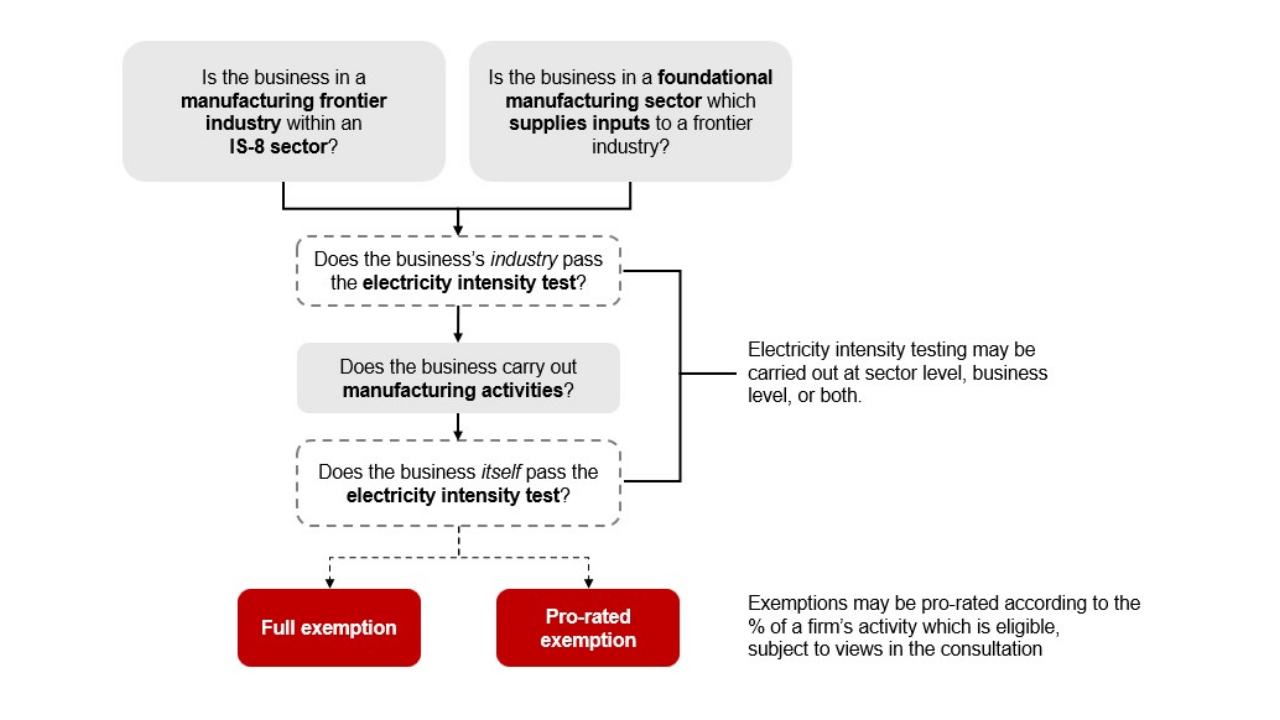
There is however some relief for British businesses. The government has advanced framework details for the British Industrial Competitiveness Scheme (BICS), designed to protect electricity-intensive manufacturing and heavy industrial sectors. 

BICS aims to deliver electricity bill discounts of up to 25% (estimated at 3.5-4p/kWh) starting in April 2027 by granting exemptions from policy costs such as the Renewables Obligation (RO), Feed-in Tariffs (FiT), and the Capacity Market (CM). With application windows opening in October – and only remaining open until the end of November – it is vital that companies check their eligibility and begin preparing their application.

If you would like to check whether your business is eligible for these discounts, you can use our BICS eligibility calculator.


Looking ahead to the winter months, meteorologists have confirmed the development of a Super El Niño weather pattern. Historically, Super El Niño events bring milder than usual temperatures to western Europe, which coupled with increased wind generation may provide a reduction in British gas demand and a boost on the supply side.


With the markets remaining volatile, we recommend that all businesses with renewals in the coming months look at a wide range of procurement strategies and consider which will suit their needs. If your business would like free expert advice on how to navigate the current energy markets, or assistance with checking BICS eligibility and handling applications, contact SeeMore Energy today. Our team of experts can help your business with bespoke strategies and advice that is tailored to your needs.

31 July 2026
By Adam Novakovic The month’s energy market movements offered parallels to the England football team: July began with great optimism but that was shattered with many questioning the judgement and integrity of officials. The ceasefire between Iran and the US was broken leading to a resumption of hostilities and a disruption to global trade routes. The impact of this on gas and electricity costs will be felt for months to come, and events in the Middle East look set to dictate energy prices for the foreseeable future.

1 July 2026
This June saw a record-breaking heatwave and the commencement of an expanded World Cup, but it wasn’t just football and tropical temperatures that were a cause for celebration. This month also saw the re-opening of the Strait of Hormuz as the US and Iran brokered a tentative peace-deal that sent waves of relief across volatile global energy markets.